Method: Follicular Unit Extraction
Approach: Doctor-Led
Cost: £3,000 – £7,000
Finance Available




Method: Follicular Unit Extraction
Approach: Doctor-Led
Cost: £3,000 – £7,000
Finance Available
Every procedure at Hair Transplant Liverpool is carried out by a doctor on the GMC register
Our clinic is centrally located and accessible from across Merseyside, Cheshire, and beyond
A candid assessment of your donor area and realistic expectations, no targets, no sales pitch
From the first follicle extracted to the final graft placed, your surgeon is present throughout
The consultation for a beard transplant is different from most surgical consultations. You come in with a photograph, a reference beard, a mental image of the shape and density you want. The surgeon’s job is to tell you what is achievable given your donor supply and facial anatomy, and to design a result that fits your face rather than the reference image. That conversation happens before any commitment to surgery.
Beard transplants relocate individual hair follicles from the scalp donor zone to the beard area using FUE extraction. The surgery addresses patchy growth, scarring, areas that have never grown hair, and patients who can grow a beard but want more density or a sharper outline. The results are permanent. Transplanted beard hair grows, responds to grooming products and can be shaved and shaped exactly like natural beard hair.
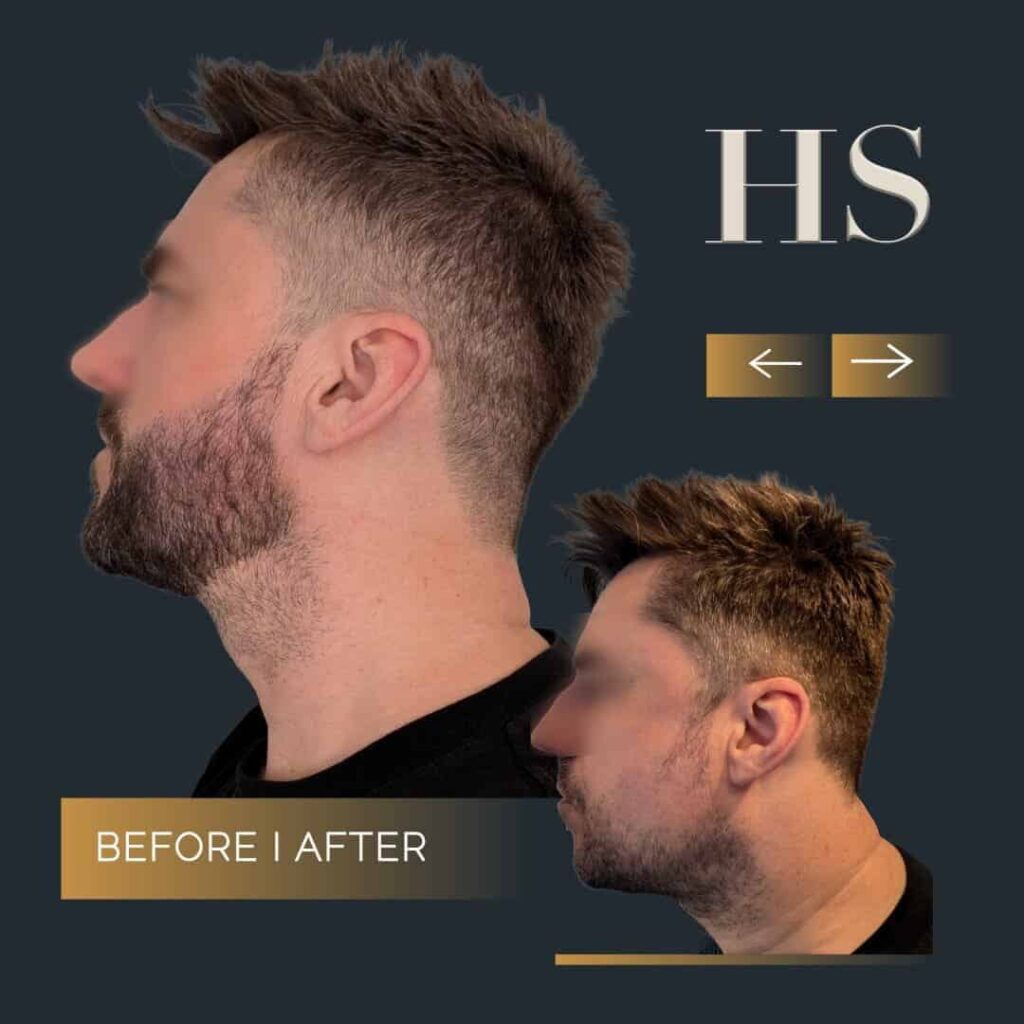
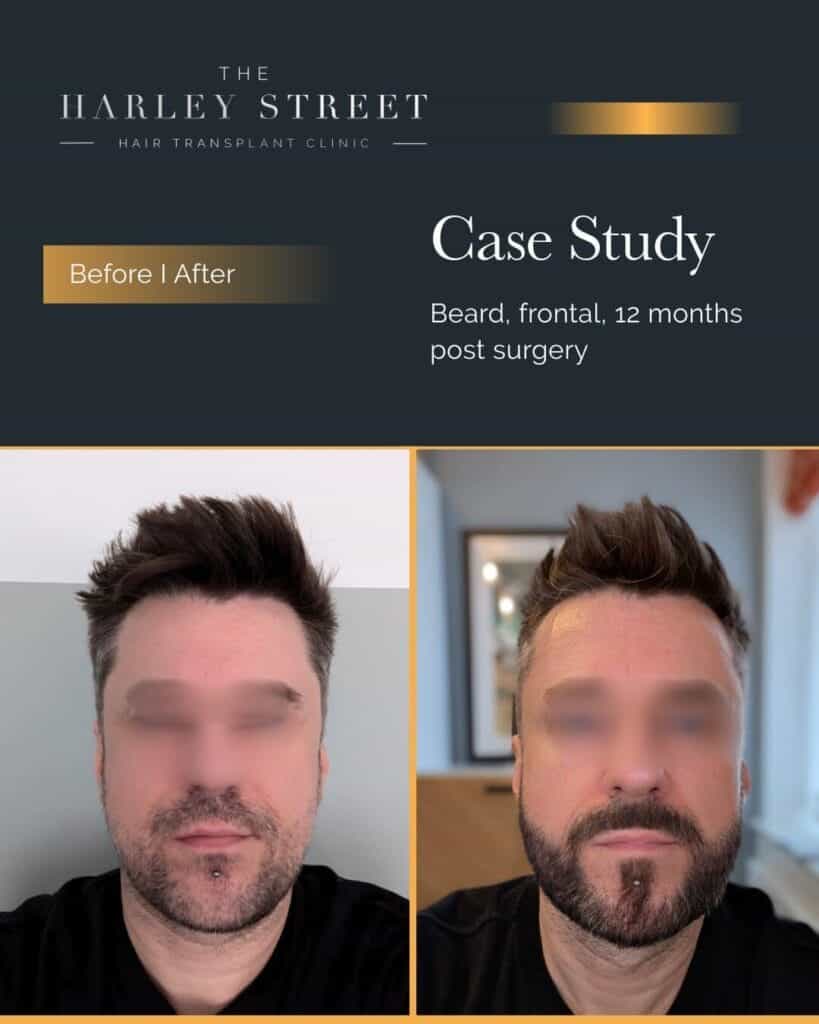
A selection of results from patients treated at our Liverpool clinic. All procedures were performed by our GMC-registered surgeons.
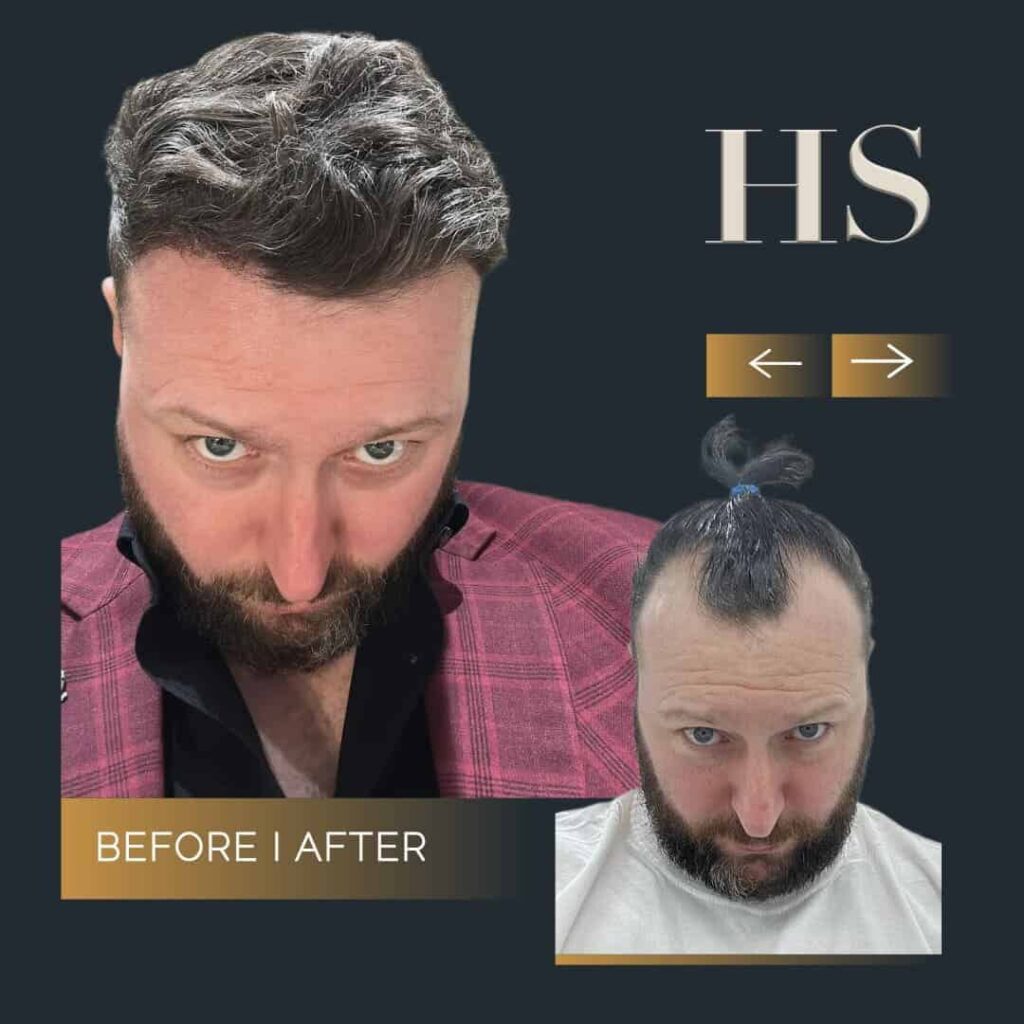
Patient results from beard transplant procedures at our Liverpool clinic.
The shape you end up with depends almost entirely on the incision design made at the start of the procedure. Once grafts are placed and hair grows through, the growth direction is fixed. This makes the pre-operative design session the most consequential part of the day. At our Liverpool clinic, the surgeon spends time before the first incision mapping the proposed beard outline with a surgical marker, asking for your input, adjusting and refining until both of you are satisfied with the plan.
The design considers several variables simultaneously. The outer boundary of the beard at the cheeks, jaw and neck must relate proportionately to your facial structure. The moustache edge determines how the beard frames the mouth. The density gradient, heaviest at the chin and jaw, lighter at the cheeks, is set by the distribution of single, double and triple hair grafts across different zones. Getting these decisions right at the design stage is what produces a beard that looks like it grew there, not one that looks placed.
The beard is not a uniform area. Each zone has its own growth direction, skin thickness and density requirement, and each is handled differently during surgery. Moustache hairs grow outward from the midline and slightly downward, requiring fine single grafts at angles of five to fifteen degrees to prevent hairs from standing upright. The chin beard can accept denser multi-hair grafts to build mass beneath the lower lip. Cheek coverage is the largest surface area and typically requires the highest graft count, with hairs angled outward and slightly downward to lie flat.
The jawline and sideburn zones frame the outer edges of the beard and are treated with particular precision, because any irregularity in the border is the first thing that reads as artificial in the final result. Patients combining a beard transplant with a scalp hair transplant have both donor demand areas planned together at a single consultation to ensure neither procedure is compromised.
Surgery begins with a final design review and consent. Both the scalp donor zone and the beard recipient area receive local anaesthetic. The scalp is shaved at the back for extraction. The beard area, in most cases, does not need to be shaved. Extraction takes place first, followed by incisions in the beard zone at the angles established during design, then implantation graft by graft. The full procedure runs six to eight hours depending on the total graft count.
Facial skin heals faster than the scalp due to its richer blood supply. Redness and small crusts around the implanted sites resolve within five to seven days. Transplanted beard hair sheds between weeks two and four, then new growth emerges from month three. Most patients see a result they can style from month five or six, with full density at nine to twelve months. The surgical team is available throughout your recovery for any questions on aftercare or progress.
Beard transplant results vary more visibly than scalp results. The density, angle and distribution of grafts is judged by everyone who looks at your face. Getting those variables right requires surgical experience specifically in beard work, not just general hair transplant volume.
Beard design is done at consultation with photographic references, face shape analysis and an honest assessment of what donor supply can realistically achieve. You will see the planned outline before any surgery is confirmed. Adjustments happen at that stage, not after.
Beard hair exits the skin at a very low angle, different from scalp hair. Placing grafts at the wrong angle produces an unnatural look regardless of density. Each graft in our beard procedures is placed to follow the directional pattern specific to that zone of the face.
Hair from the nape of the neck is often closer in calibre to natural beard hair than hair from the mid-scalp. Your surgeon selects donor follicles partly on the basis of texture compatibility with the area being filled, not purely by what is easiest to harvest.
Your beard transplant is performed by a single GMC-registered surgeon from first extraction to final placement. There is no handover to a technician team at the implantation stage. You meet your surgeon at consultation and they perform the procedure.
What to expect after your procedure, week by week and month by month.
The transplanted area will look red and the small graft crusts will be visible. Avoid touching or disturbing the beard area. Sleep slightly elevated to reduce oedema. You can wash gently from day five using the technique shown at discharge. Most patients find they can return to work within four to six days, keeping the beard area partially covered with light stubble from existing hair around the transplanted zone.
Transplanted beard hair typically sheds between weeks two and eight, which is earlier than scalp hair in some cases. This shedding is expected and does not indicate graft loss. The follicle remains implanted. The beard area may appear sparse or patchy during this phase, which is temporary. Avoid shaving across the transplanted zone until cleared by your surgeon at your follow-up appointment.
Regrowth in beard transplants can be slightly slower than scalp hair due to the facial follicular cycle. Many patients see early regrowth at four to five months. Full density assessment is done at twelve months. The hair will initially be finer and may be slightly lighter in colour before it fully matures, which is normal across the first growth cycle.
Beard transplant cost depends on the zones being treated and the total graft count required. A targeted patch fill for a localised scar or bald area starts from around £3,500. A full beard covering cheeks, chin, jaw and moustache, the most common presentation at our Liverpool clinic, typically costs between £5,500 and £6,000. Cases involving very large surface areas or complex scarring are quoted individually. Finance is available and a free consultation is the right starting point to understand what is achievable for your specific case.
Make the best investment in yourself and find out more about how we can help eliminate hair loss for good!
Our Liverpool clinic is at Exchange Flags in the city centre, a short walk from Liverpool Lime Street and Liverpool Central stations.
Hair Transplant Liverpool
Horton House, Exchange Flags,
Liverpool, L2 3PF
Queen Square Bus Station is also nearby. There is no on-site parking, but several multi-storey car parks are within a five-minute walk. Appointments are required.
A full cheeks-to-chin-to-moustache beard with good density typically requires 2,500 to 3,500 grafts. A targeted patch fill for a small area or scar may need as few as 500 to 1,000. The surgeon maps the required count zone by zone at consultation.
Yes, when the incision angles are correct. Beard hairs grow at very shallow angles, typically five to fifteen degrees to the skin surface. Grafts placed at the wrong angle grow outward or upward and look placed rather than grown. At our clinic every incision is made by the operating surgeon, not a technician, to ensure precision throughout.
Yes, once the transplanted hair has grown through, from around month three or four onwards, it can be shaved, trimmed with clippers and styled exactly like natural beard hair. There are no long-term restrictions.
FUE extraction for beard transplants leaves the same tiny dot marks in the scalp donor zone as scalp FUE. These are not visible at hair lengths of grade two or above. There is no linear scar.
Yes, though scar tissue has a different vascularity to normal skin and graft survival rates in dense scar tissue may be lower than in unaffected skin. The surgeon will examine the scar at consultation and give you an honest assessment of what density is achievable in that specific area.
Both can be planned together and in many cases performed on the same day if the combined graft count allows. The surgeon plans total donor demand across both areas at a single consultation to ensure neither result is compromised.
Aside from achieving fantastic results, we believe that keeping in touch with our patients before, during and after their hair transplantation procedure is paramount – it helps to keep our patients feeling calm and in control. We’re always on hand to provide guidance, support and aftercare advice. Time and again, our patients tell us that this is what sets us apart from other clinics.
You can read our great reviews of FUE hair transplants over on Google and Trustpilot