
Method: Follicular Unit Transplantation
Approach: Doctor-Led
Cost: £4,000 – £8,000+
Finance Available





Method: Follicular Unit Transplantation
Approach: Doctor-Led
Cost: £4,000 – £8,000+
Finance Available
Every procedure at Hair Transplant Liverpool is carried out by a doctor on the GMC register
Our clinic is centrally located and accessible from across Merseyside, Cheshire, and beyond
A candid assessment of your donor area and realistic expectations, no targets, no sales pitch
From the first follicle extracted to the final graft placed, your surgeon is present throughout
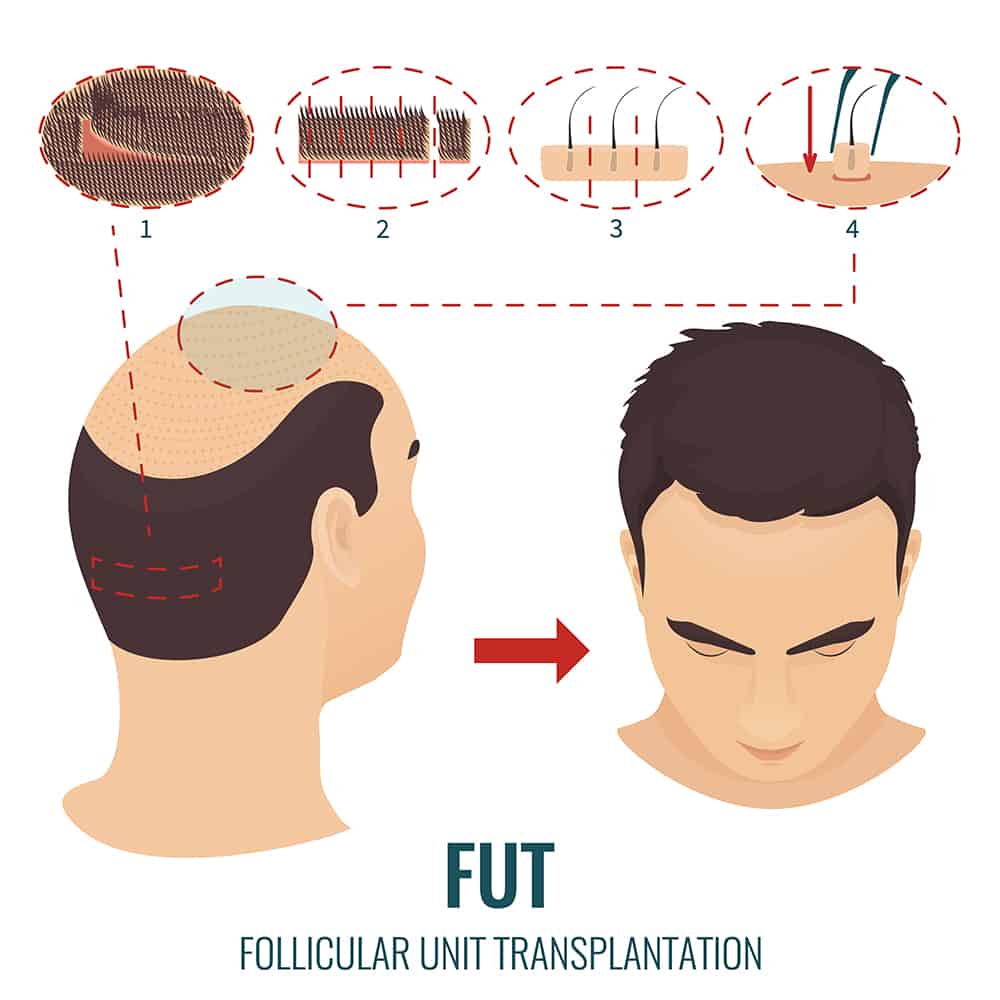
FUT, or Follicular Unit Transplantation, removes a measured strip of scalp from the donor zone at the back of the head. Technicians working under stereo microscopes then dissect that strip into individual follicular units, which are implanted into the recipient area using the same technique as FUE. Unlike FUE, the surgeon cannot cherry-pick individual follicles. The grafts you get are determined by what the strip contains. That difference shapes when FUT is the right choice and when it is not.
FUT is particularly well suited to women and transgender patients. The strip is excised from beneath the surrounding hair, meaning the donor area never needs to be shaved. The hair above and below the incision site remains in place throughout the procedure and the healing period, which is a significant consideration for patients who do not want visible signs of surgery during recovery.
The technique has been in clinical use for over three decades and has an evidence base that no newer method can match. For the right patient, it remains a strong and often overlooked option.
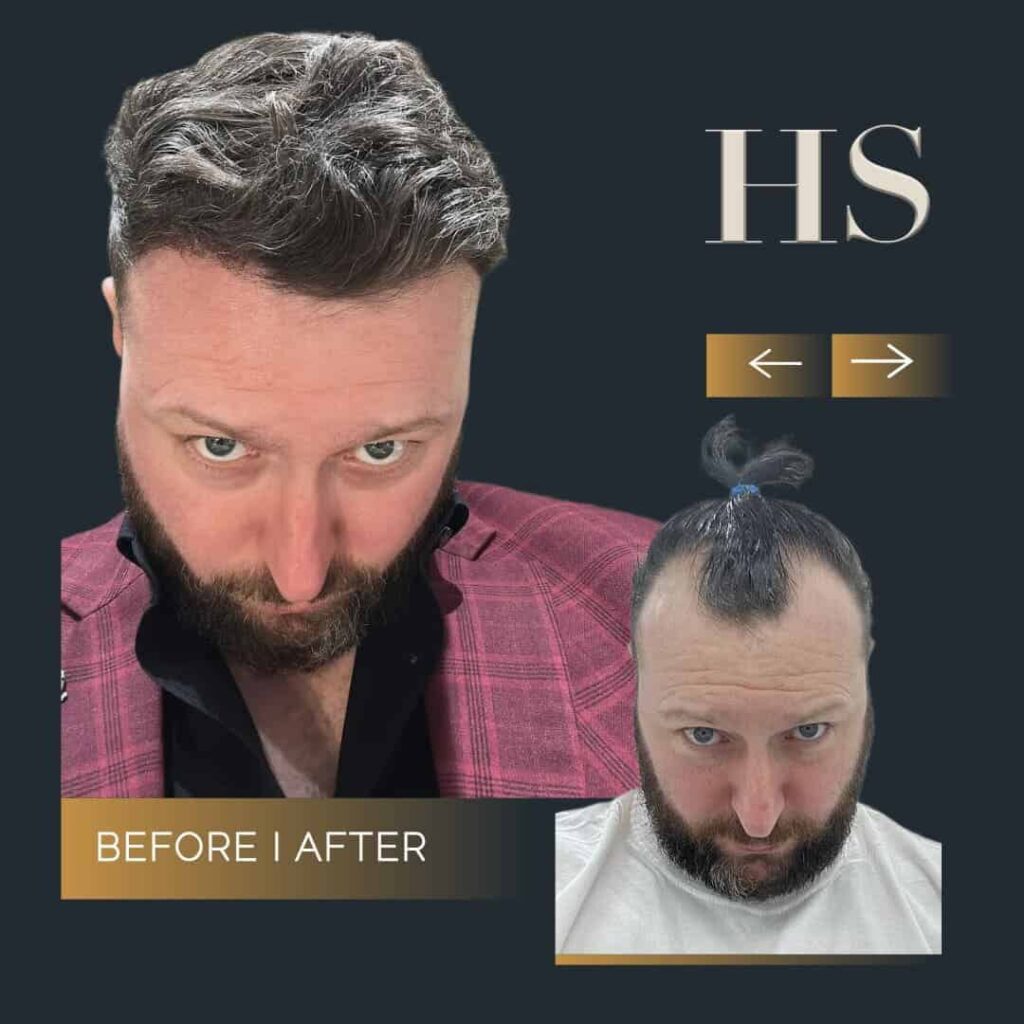
A selection of results from patients treated at our Liverpool clinic. All procedures were performed by our GMC-registered surgeons.
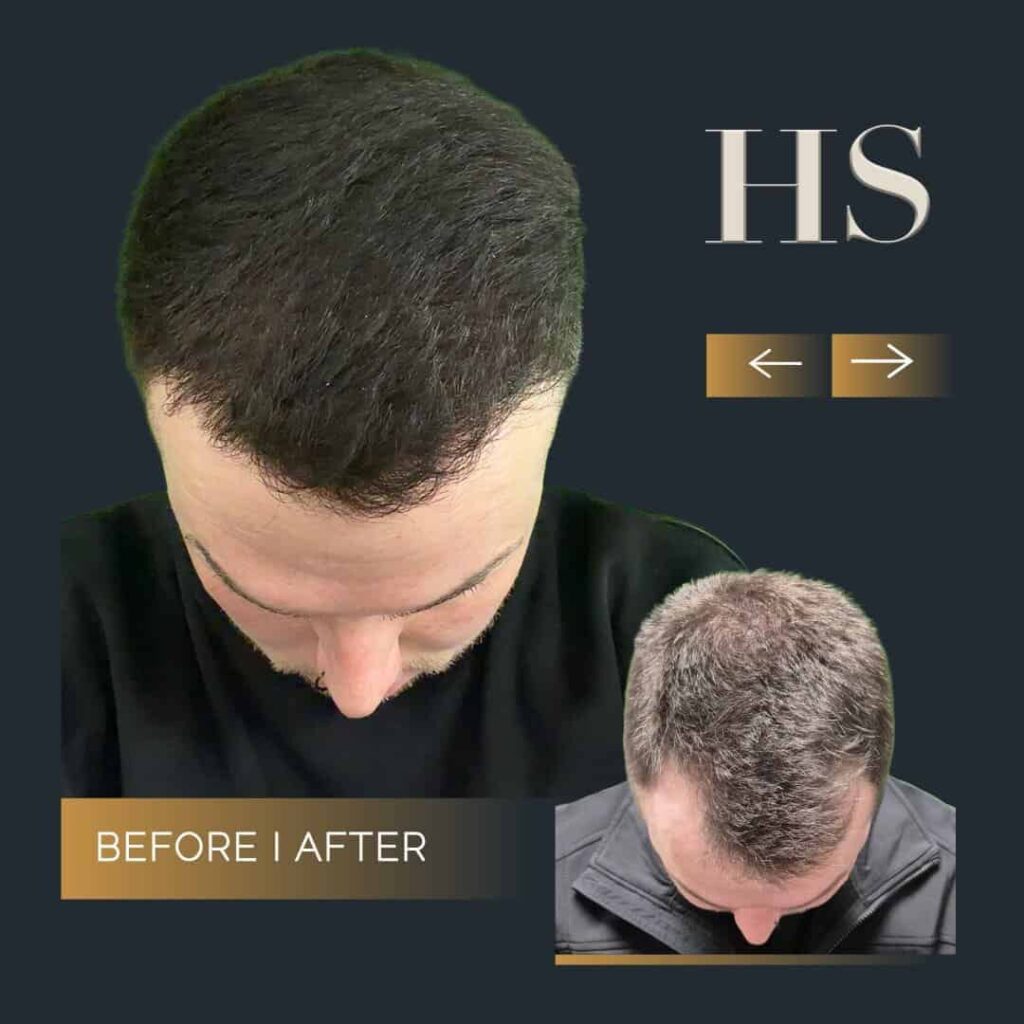
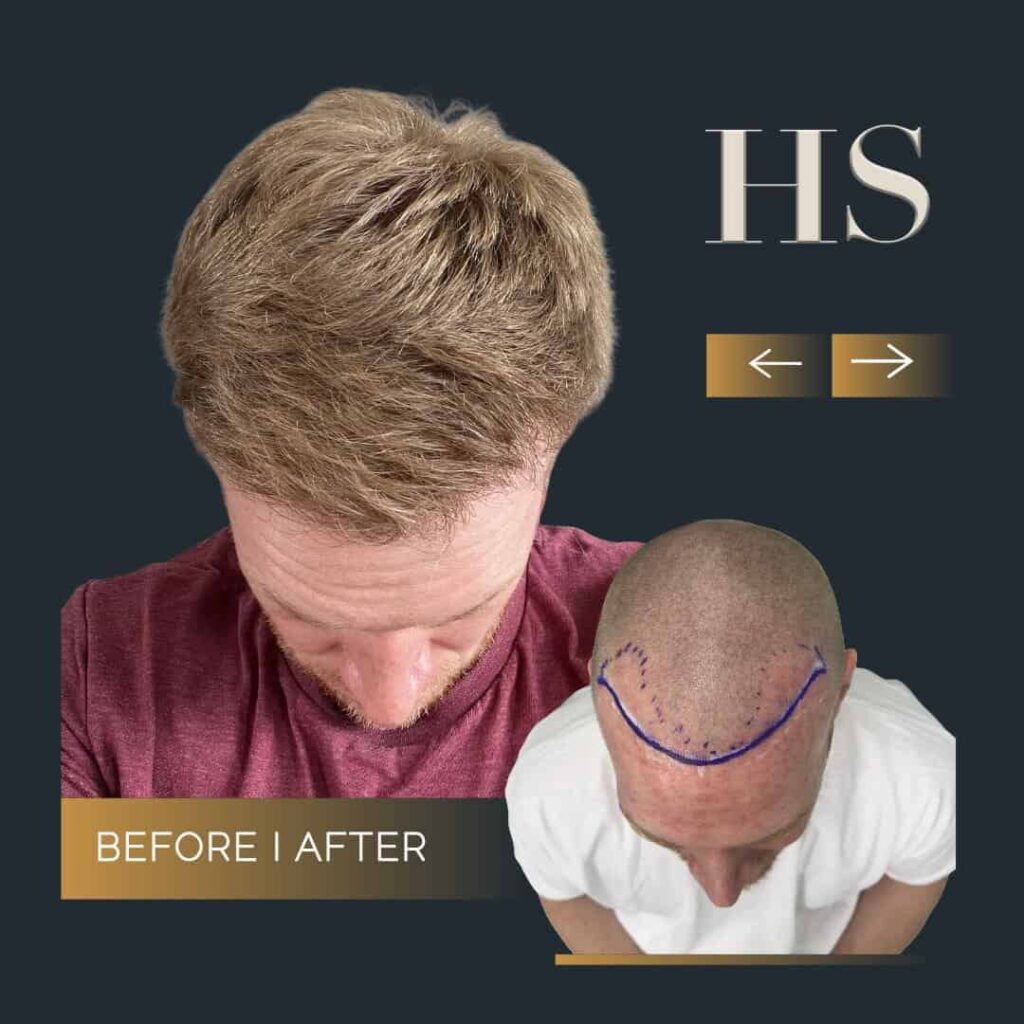
Make the best investment in yourself and find out more about how we can help eliminate hair loss for good!
This is the most practically significant advantage of FUT for most of our patients. In FUE, the donor area is shaved before extraction begins. The punch tool requires close access to individual follicles, and hair in the way makes that impossible. With FUT, the strip is removed from beneath the surrounding hair. The scalp above and below the incision line stays intact and unshaved. After closure, that surrounding hair falls back into place and covers the wound.
For women considering a hairline transplant or crown restoration, this matters enormously. Shaving a section of the back of the head, even temporarily, is not an acceptable trade-off for many women. FUT removes it as a concern entirely. The same applies to transgender patients undergoing feminising hairline work, for whom maintaining a normal appearance throughout recovery is often a clinical priority, not just a cosmetic preference.
In FUE, follicles are extracted individually from across the donor zone using a small punch tool. Over a large session, hundreds of tiny extraction sites are distributed across the back and sides of the scalp. The area heals well, but the follicular density in that region is permanently reduced. With a sufficiently large FUE procedure, that thinning becomes visible, particularly at short hair lengths.
FUT works differently. The grafts come from a contained strip of scalp rather than from individual punch extractions spread across the donor zone. The surrounding hair-bearing scalp remains undisturbed. There is no general thinning of the donor area from this procedure. The trade-off is a linear scar where the strip was removed, which is why FUT is not appropriate for patients who intend to wear their hair at grade one or two.
FUT and FUE can be performed together when a patient needs a very high total graft count. The sequencing depends on whether the procedure is completed in one day or split across two days, and the reasoning is clinical, not logistical.
When both techniques are performed in a single day, FUT comes first. The strip is excised and passed immediately to the technician team to begin dissection into individual follicular units. This slivering process takes considerable time to complete under magnification. While it is underway, the surgeon moves to FUE and begins individual follicle extraction from the remaining donor zone. The two processes run in parallel, with grafts from both sources ready for implantation together.
When the procedure is split across two days, the order reverses: FUE is performed on day one and FUT on day two. The reason is precision. On day one, the surgeon can cherry-pick the best individual follicles using the punch device. Crucially, they already have in mind which area of the donor zone will be used for the strip excision on day two, and they deliberately avoid extracting from that area during the FUE session. This preserves the planned strip zone intact. On day two, the FUT strip is excised from exactly that site and dissected in the normal way.
Patients travelling from outside Liverpool for a two-day combined procedure can book accommodation near Exchange Flags for both nights. We are happy to suggest options on request.
The morning starts with the surgeon measuring and marking the strip dimensions based on your scalp laxity and the graft count target. Scalp laxity is assessed by pinching the skin at the donor zone. Adequate laxity is necessary for tension-free wound closure. If laxity is limited, the planned strip width is adjusted accordingly. Local anaesthetic is administered to the donor zone before any incision is made.
The strip is excised and passed immediately to the technician team, who work under stereo microscopes to dissect it into singles, doubles and triples. You work with the follicular units the strip contains. This dissection takes place simultaneously with the surgeon preparing the recipient incisions, so both phases run in parallel. Once grafts are ready and incisions are made, implantation begins and continues until the full count is placed.
Wound closure uses absorbable sutures or, in suitable candidates, a trichophytic technique where one wound edge is bevelled so hair grows through the scar line over time, further reducing its visibility. The total procedure typically runs seven to nine hours. You are discharged the same day.
Our clinic is at Exchange Flags in Liverpool city centre, within easy reach of Liverpool Lime Street and Liverpool Central stations. Patients travel to us regularly from across the region. Typical journey times: Chester under forty minutes by train, Warrington under thirty minutes, Manchester Piccadilly around forty-five minutes, and Preston roughly forty minutes by rail. Patients from North Wales and the Wirral often find the journey straightforward via Lime Street.
For patients booking a two-day combined FUT and FUE procedure, we recommend arranging accommodation near the city centre for both nights. We are happy to suggest options near Exchange Flags on request. Video consultations are available as a first step before committing to travel.
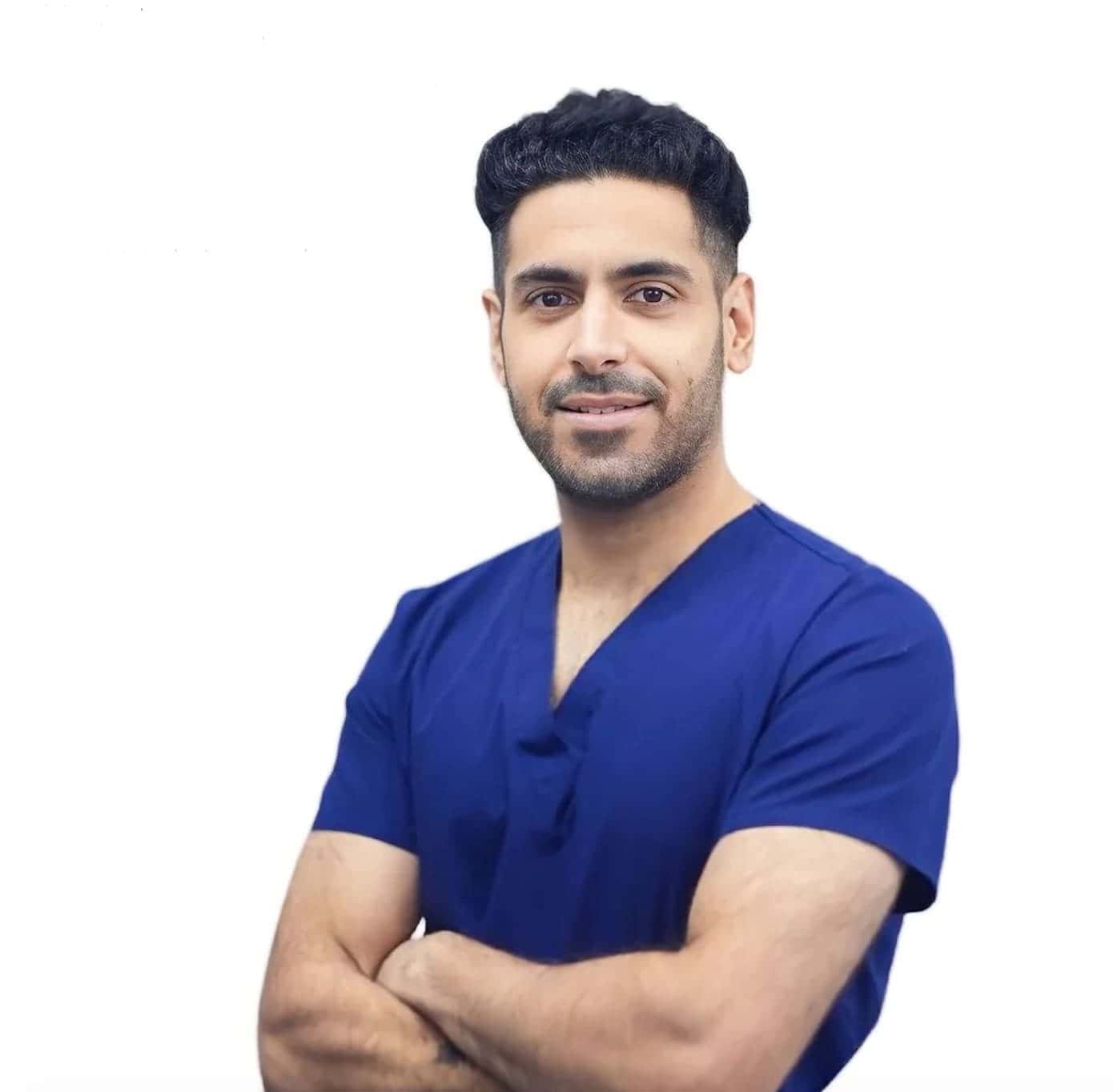
FUT is a technically demanding procedure that produces its best results in experienced hands. The key variables are strip design, dissection quality under magnification, and wound closure technique. Here is what makes it the right choice for the patients it suits.
The strip is excised from beneath the surrounding hair. The hair above and below the incision stays in place throughout. This is the primary reason women and transgender patients often choose FUT: there is no shaved patch at the back of the head, no visible sign of surgery during recovery, and no need to explain anything to colleagues or family.
FUE extracts follicles individually across the donor zone, gradually reducing density in that region over a large session. FUT takes a contained strip. The surrounding scalp is not individually depopulated, so the donor zone outside the strip site retains its full density. The scar is linear and concealed by the hair above it.
For patients who need a very high total graft count, the two techniques can be combined. In a single-day combined procedure, FUT is performed first while the technician team slivers the grafts under magnification, and FUE runs in parallel. In a two-day split, FUE comes first so the surgeon can cherry-pick grafts while keeping the planned strip zone intact for FUT on day two. The sequencing is deliberate in both cases and produces the highest possible total yield.
Strip excision, wound closure and recipient incisions are all performed by your GMC-registered surgeon. The dissection team works under magnification simultaneously, so both phases proceed in parallel without delay. One surgeon operates on one patient per day.
What to expect after your procedure, week by week and month by month.
The donor wound requires more care in the first week than FUE. Tightness and mild pulling at the back of the scalp is common for the first three to five days and is managed with standard analgesics. Keep the donor area dry and avoid any bending or lifting that strains the sutured wound. The recipient area follows the standard timeline: keep it dry, sleep elevated, avoid touching or scratching. On day five the surgeon will clear you to begin gentle washing. A follow-up is arranged at the ten-day mark to check donor wound healing and remove any non-absorbable sutures if used.
Transplanted hair sheds between weeks two and six, which is normal and expected. The follicle remains in place and enters a resting phase before producing new hair. Avoid heavy physical activity and gym use for three weeks rather than the two-week minimum applied after FUE, as the sutured donor wound benefits from additional rest time. Absorbable sutures dissolve within fourteen to twenty-one days. Desk-based work is typically manageable within three to five days of the procedure.
Growth begins around month three as fine, soft hair appears across the recipient zone. This builds steadily through months four to nine, gradually thickening to match the texture of your natural hair. Cap use is recommended for extended sun exposure during the first month following surgery.
Final density is reached at twelve to eighteen months. Transplanted follicles taken from the donor strip are DHT-resistant and will not fall out. The linear donor scar continues to mature and often becomes less visible over the second year as the surrounding hair grows back fully. A follow-up review at twelve months is included as standard.
FUT is priced to reflect the skilled technician time involved in strip dissection under magnification. Procedures typically start from around £4,000 for a smaller strip session and range to £7,000 or more for high-volume sessions involving 3,500 or more grafts. The precise figure is confirmed at consultation once the surgeon has assessed your donor laxity, strip dimensions and required coverage. Finance is available. Your consultation is free and includes a full Norwood assessment and donor evaluation.
Make the best investment in yourself and find out more about how we can help eliminate hair loss for good!
Our Liverpool clinic is at Exchange Flags in the city centre, a short walk from Liverpool Lime Street and Liverpool Central stations.
Hair Transplant Liverpool
Horton House, Exchange Flags,
Liverpool, L2 3PF
Queen Square Bus Station is also nearby. There is no on-site parking, but several multi-storey car parks are within a five-minute walk. Appointments are required.
The main reason is that FUT does not require the donor area to be shaved. The strip is excised from beneath the surrounding hair, which falls back into place after closure and conceals the wound throughout healing. Women who do not want a visible shaved patch during recovery, and who typically do not wear their hair at grade one or two, are well suited to FUT for both of these reasons.
In FUE, the surgeon selects and extracts individual follicles one by one, which allows for targeted selection of the healthiest and most viable grafts. In FUT, grafts come from whatever follicular units the excised strip contains. There is no individual selection. The technician team dissects what the strip provides. This is a fundamental mechanical difference between the two techniques.
No. FUT removes a contained strip rather than extracting follicles individually across the donor zone. The hair-bearing scalp surrounding the strip site is not touched, so there is no general reduction in donor density from this procedure. There is a linear scar at the strip site, but the density of the wider donor area is preserved.
Yes, and the sequencing depends on whether the procedure is one day or two. In a single-day combined session, FUT is performed first: the strip is excised and the technician team begins the time-consuming dissection of grafts under magnification, while the surgeon simultaneously performs FUE from the remaining donor zone. In a two-day procedure, the order reverses. FUE is done on day one, allowing the surgeon to cherry-pick the best individual grafts while carefully avoiding the area of the donor zone already earmarked for the FUT strip. FUT is then performed on day two. Both approaches are designed to maximise total yield while preserving the integrity of each extraction site.
Yes. FUT leaves a horizontal linear scar across the donor area. At hair lengths of grade three or above it is typically concealed by the surrounding hair. At grade one or two it will be visible. If you intend to wear your hair very short, FUE is the more appropriate technique and we will advise accordingly at consultation.
Absorbable sutures dissolve within fourteen to twenty-one days. If non-absorbable sutures are used, a removal appointment is booked at ten to fourteen days post-procedure. Both types are standard and the choice is made based on the wound closure technique used.
Aside from achieving fantastic results, we believe that keeping in touch with our patients before, during and after their hair transplantation procedure is paramount – it helps to keep our patients feeling calm and in control. We’re always on hand to provide guidance, support and aftercare advice. Time and again, our patients tell us that this is what sets us apart from other clinics.
You can read our great reviews of FUE hair transplants over on Google and Trustpilot