




Every procedure at Hair Transplant Liverpool is carried out by a doctor on the GMC register
Our clinic is centrally located and accessible from across Merseyside, Cheshire, and beyond
A candid assessment of your donor area and realistic expectations, no targets, no sales pitch
From the first follicle extracted to the final graft placed, your surgeon is present throughout
Crown Hair Transplant in Liverpool
Crown hair loss is usually discovered by someone else before you find it yourself. A photograph from above, a comment from a friend, a glance in an unexpected mirror at the back of a hairdresser’s chair. Because it is not visible in a standard front-facing mirror, the crown can be further advanced by the time you start to address it than the hairline would be. Many men arrive at our Liverpool clinic having been aware of crown thinning for several years and unsure whether to treat it medically, surgically or both.
The answer is different for every patient. Crown transplants are among the most complex procedures in hair surgery, and they are also among the most frequently over-promised by clinics offering a quick solution without a clear long-term plan. This is what a realistic, honest assessment of crown restoration actually involves.
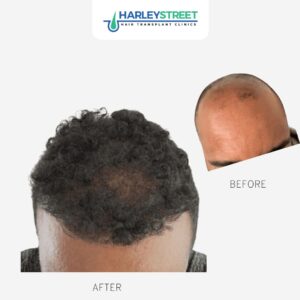
Before and After Crown Hair Transplant Results in Liverpool
A selection of results from patients treated at our Liverpool clinic. All procedures were performed by our GMC-registered surgeons.
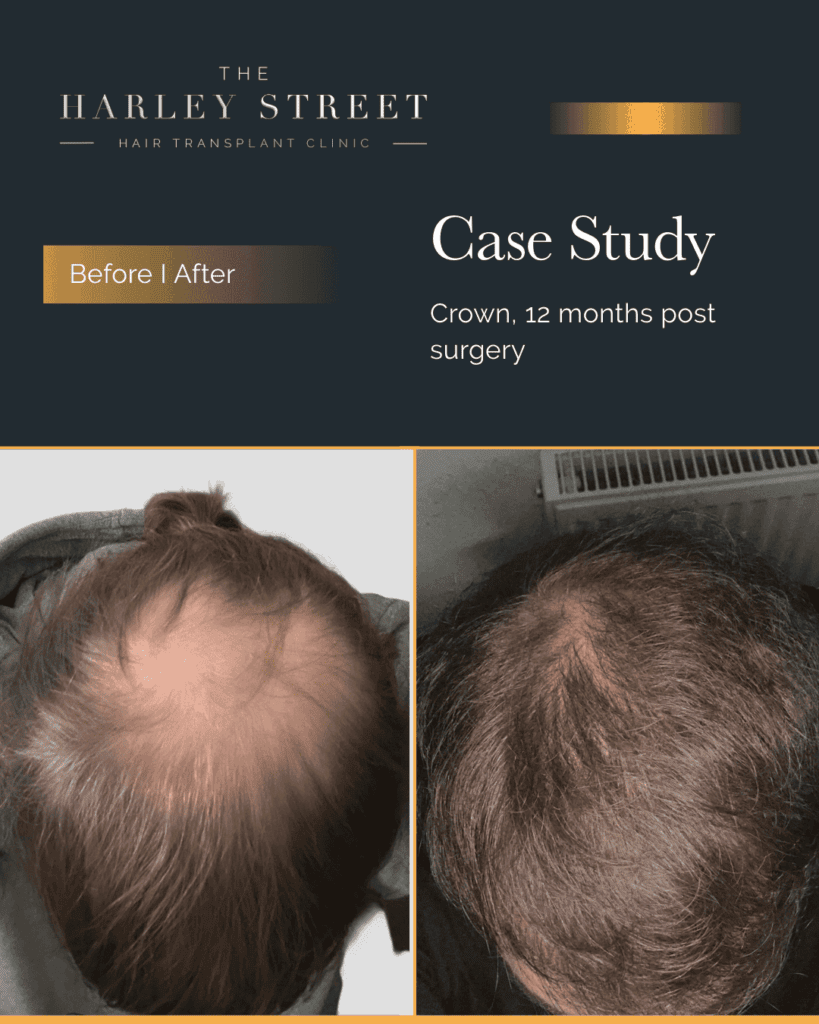
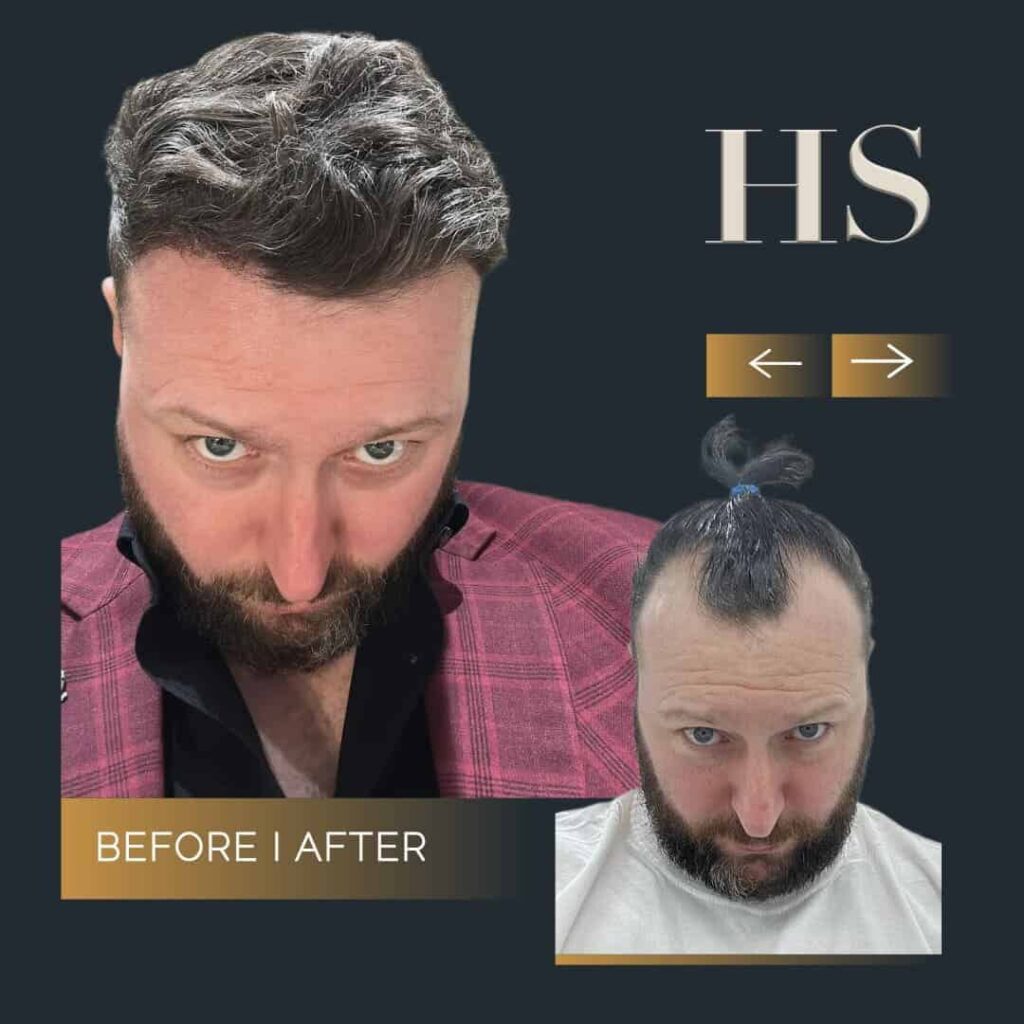
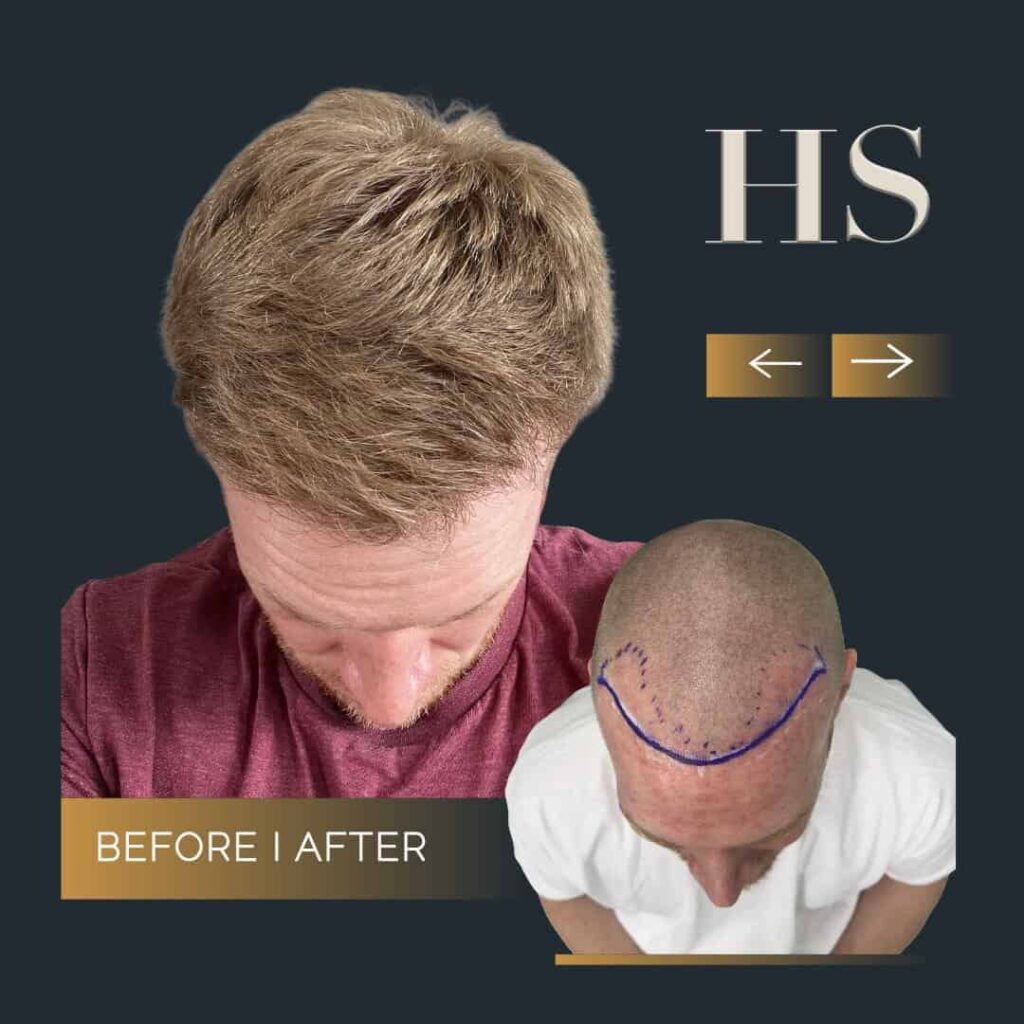
Before and After Crown Hair Transplant Results
Crown restoration results from Hair Transplant Liverpool patients.
Why the Crown Loses Density So Visibly
The crown loses its apparent density faster than any other zone on the scalp, for a reason that is geometric rather than biological. All crown hairs radiate outward from a central point, the vortex. When you look at the crown from above, you are looking down the length of the hair shafts rather than across their width. This means the gaps between follicles appear far larger to the eye than the actual graft count would suggest. A patient with 50 grafts per square centimetre at the crown may appear nearly bald from a drone-angle photograph, while a patient with the same density at the hairline looks reasonably full.
The practical implication is that restoring the crown to a visually full appearance requires a higher graft count per square centimetre than the hairline or mid-scalp. It is not an area where underdensity is forgiving. This affects planning, cost and the total lifetime demand on your donor zone.
The Vortex Problem: Why Surgical Precision Is Different Here
Every hair on the scalp grows at an angle determined by its position relative to the natural growth pattern. At the hairline, that direction is broadly consistent: forward and downward. At the crown, hair direction changes continuously as you work around the vortex. Hairs at the twelve o’clock position of the crown grow toward six o’clock. Hairs at three o’clock grow toward nine. Every intermediate position has a corresponding direction between those two extremes.
The surgeon must adjust every incision angle individually as they work around the crown circle. A zone that is technically small in surface area requires more individual directional decisions than a hairline three times its size. Any inconsistency in the rotational pattern, any cluster of grafts growing in the wrong direction, becomes visible as a swirling anomaly as the hair grows through. This is one reason experienced surgeon-led technique matters more at the crown than almost anywhere else.
Medical Management First: What the Evidence Shows
Crown hair loss responds better to finasteride than any other zone on the scalp. The Proscar Long-term Efficacy and Safety Study (PLESS), a large randomised controlled trial, showed that finasteride produced visible improvement in crown density in approximately 66% of men who took it consistently for two years, compared to minimal effect in placebo groups. The crown was the zone where the drug performed best across all measured areas of the scalp.
This matters clinically. A patient presenting with moderate crown thinning who has not tried finasteride may achieve a result through medication alone that satisfies them and preserves donor supply for the future. A patient who has already used finasteride for two years without satisfactory improvement is a much clearer candidate for surgical intervention. We regularly recommend a medical trial period before committing to crown surgery, particularly for patients under forty where hair loss is still likely to progress.
Minoxidil as an adjunct can further support crown density, particularly at the vertex, and is appropriate for patients who want to pursue both medical and surgical options together. The surgeon will discuss the full range at consultation rather than defaulting to a surgical recommendation when a medical one may deliver a comparable outcome.
Planning for the Future, Not Just Today
The crown will often continue to expand as hair loss advances. A patient at Norwood IV with a 4cm crown patch who has a crown transplant today may find that by Norwood VI that restored island of hair sits surrounded by bare scalp, looking isolated and worse than the original hair loss. Planning around the full likely trajectory of hair loss, not just the current presentation, is essential for crown transplant work.
At consultation, the surgeon will assess your current Norwood stage, rate of progression, family history and whether you are using medical management. Based on that assessment, a recommendation is made. That recommendation might be: surgery now, planned conservatively to leave donor supply for the scalp areas you will need later. Or: finasteride first, review in twelve months. Or: a combined crown and hairline procedure in one session where donor supply allows. There is no templated answer.
The Crown Transplant Procedure
When surgery is appropriate, the procedure follows the same FUE structure: donor extraction, recipient incisions made with continuous directional adjustment around the vortex, then graft placement. Crown procedures of 1,500 to 2,500 grafts typically run eight to ten hours. Aftercare is standard FUE protocol. Recovery follows the same timeline: crusting resolves in a week, shedding between weeks two and six, new growth from month three, final density at twelve to eighteen months. Crown results often take toward the longer end of that timeline to become fully visible, because the radial growth pattern means early hair grows in multiple directions before it fills in.
Why Hair Transplant Liverpool for Crown Restoration?
Crown transplants are technically demanding in a different way from hairline work. The vortex pattern, the optical illusion of the whirl, and the ongoing nature of crown loss all require a planning conversation before surgery is even appropriate.
Vortex pattern mapped individually
The crown vortex rotates clockwise or counter-clockwise and is unique to each patient. Grafts placed without accounting for the rotational pattern create a visible directional inconsistency. Your surgeon maps the vortex at design stage and plans graft direction across every zone of the crown from that reference point.
Medical management discussion before surgery
Crown hair loss often continues after a transplant if the underlying androgenetic alopecia is not addressed medically. Your surgeon will discuss finasteride and minoxidil as adjuncts to surgery during consultation. Using the transplant to restore density alongside medical treatment to maintain native hair produces significantly better long-term outcomes than surgery alone.
Conservative front-to-back prioritisation
Directing all available donor supply into a crown can leave nothing for future hairline recession. If you are likely to experience continued loss, your surgeon will present a prioritisation plan that accounts for both the crown and the hairline over a ten to fifteen year horizon, not just the result six months after today’s procedure.
Multi-session planning where appropriate
Large crown areas sometimes benefit from a staged approach: a first session establishes the vortex zone and initial density, and a second session fills in around the first result once healing confirms graft survival. Your surgeon will advise whether a single large session or a staged plan is appropriate for your case.
Crown Hair Transplant Recovery Timeline
What to expect after your procedure, week by week and month by month.
The crown is a challenging area to keep elevated after surgery. Sleeping position matters — try to avoid sleeping flat on the back of the crown during the first five days. A travel pillow placed around the neck can help reduce pressure on the recipient area. Day five washing using the demonstrated technique clears most graft crusting. Swelling, if it occurs, tends to be less pronounced than in hairline procedures.
Shedding occurs across weeks two to six, which is standard. The crown area may look visually unchanged or slightly worse during this phase. This is expected and temporary. Continue any medically prescribed hair loss treatments that were discussed at consultation. Avoid heavy lifting, gym use, and direct sun on the crown.
Crown regrowth tends to be slightly slower than hairline regrowth, partly due to differences in follicular cycle length in the vertex zone. Most patients see meaningful density improvement from month five to six, with the full assessment done at twelve months. If a second session was planned, the timing is typically assessed at the nine to twelve month mark once the first round of growth has fully expressed.
Cost of Crown Hair Transplant in Liverpool
A moderate crown patch requiring 1,000 to 1,500 grafts typically starts from £4,000 to £4,500. Larger crown zones requiring 2,000 or more grafts are quoted individually at consultation. Combined crown and hairline procedures are assessed together and planned as a single session where donor supply allows. Finance is available. A free consultation is the right starting point, including a full Norwood assessment and an honest discussion of whether medical management, surgery or a combination is the right approach for your presentation.
Make the best investment in yourself and find out more about how we can help eliminate hair loss for good!
Where to Find Us
Our Liverpool clinic is at Exchange Flags in the city centre, a short walk from Liverpool Lime Street and Liverpool Central stations.
Hair Transplant Liverpool
Horton House, Exchange Flags,
Liverpool, L2 3PF
Queen Square Bus Station is also nearby. There is no on-site parking, but several multi-storey car parks are within a five-minute walk. Appointments are required.
Frequently Asked Questions
In many cases, yes. Crown hair loss responds well to finasteride, with clinical trial data showing visible improvement in around two thirds of men who take it consistently. If you have not tried medical management, a trial period before surgery is often the most sensible first step. The surgeon will give you a direct recommendation at consultation based on your presentation and rate of loss.
Yes, where donor supply permits the combined graft count. This is assessed at consultation and depends on the size of both treatment areas and the density of your donor zone. Treating both in one session reduces overall recovery time and avoids a second procedure.
The geometry of the crown creates an optical illusion. Because you are looking down the length of hair shafts rather than across them, gaps between follicles appear proportionally much larger from above. This is why the crown loses apparent density faster than the hairline even at similar actual graft counts per square centimetre.
Transplanted grafts are permanent. But if native hair surrounding the transplanted zone continues to thin, the overall appearance can change even if the transplant itself holds. Continuing finasteride after surgery is one of the most effective ways to protect the surrounding native hair and maintain the overall result.
There is no single threshold. The decision depends on current presentation, rate of progression, age, donor supply and whether you are using medical management. Some patients at Norwood IV are good surgical candidates. Others at the same stage would benefit from medical management first. The surgeon will give you a specific recommendation.
New growth begins from month three and builds through months six to nine. Crown results often take the full twelve to eighteen months to reach final density, partly because the radial growth pattern means the hair fills in from the vortex outward and looks sparse before it reaches full coverage.
Patient Testimonials
Aside from achieving fantastic results, we believe that keeping in touch with our patients before, during and after their hair transplantation procedure is paramount – it helps to keep our patients feeling calm and in control. We’re always on hand to provide guidance, support and aftercare advice. Time and again, our patients tell us that this is what sets us apart from other clinics.
You can read our great reviews of FUE hair transplants over on Google and Trustpilot