
Method: Follicular Unit Extraction
Approach: Doctor-Led
Cost: £3,000 – £5,000
Finance Available





Method: Follicular Unit Extraction
Approach: Doctor-Led
Cost: £3,000 – £5,000
Finance Available
Every procedure at Hair Transplant Liverpool is carried out by a doctor on the GMC register
Our clinic is centrally located and accessible from across Merseyside, Cheshire, and beyond
A candid assessment of your donor area and realistic expectations, no targets, no sales pitch
From the first follicle extracted to the final graft placed, your surgeon is present throughout
Eyebrows have become one of the most attention-focused features in cosmetic practice. The growth of microblading, tinting and threading services reflects how much people invest in brow appearance. For patients who have lost brow hair permanently, whether through over-plucking, alopecia, thyroid conditions or scarring, cosmetic treatments manage the appearance but do not solve the problem. An eyebrow transplant restores living, permanent hair that grows from the skin the way natural brows do.
At our Liverpool clinic, eyebrow transplants are performed using FUE extraction from the scalp donor zone, with every extraction and every implantation incision made by a GMC-registered surgeon. The graft counts involved are small compared to scalp procedures, typically 100 to 400 grafts per brow, but the precision requirement is higher per follicle than in any other hair transplant type.
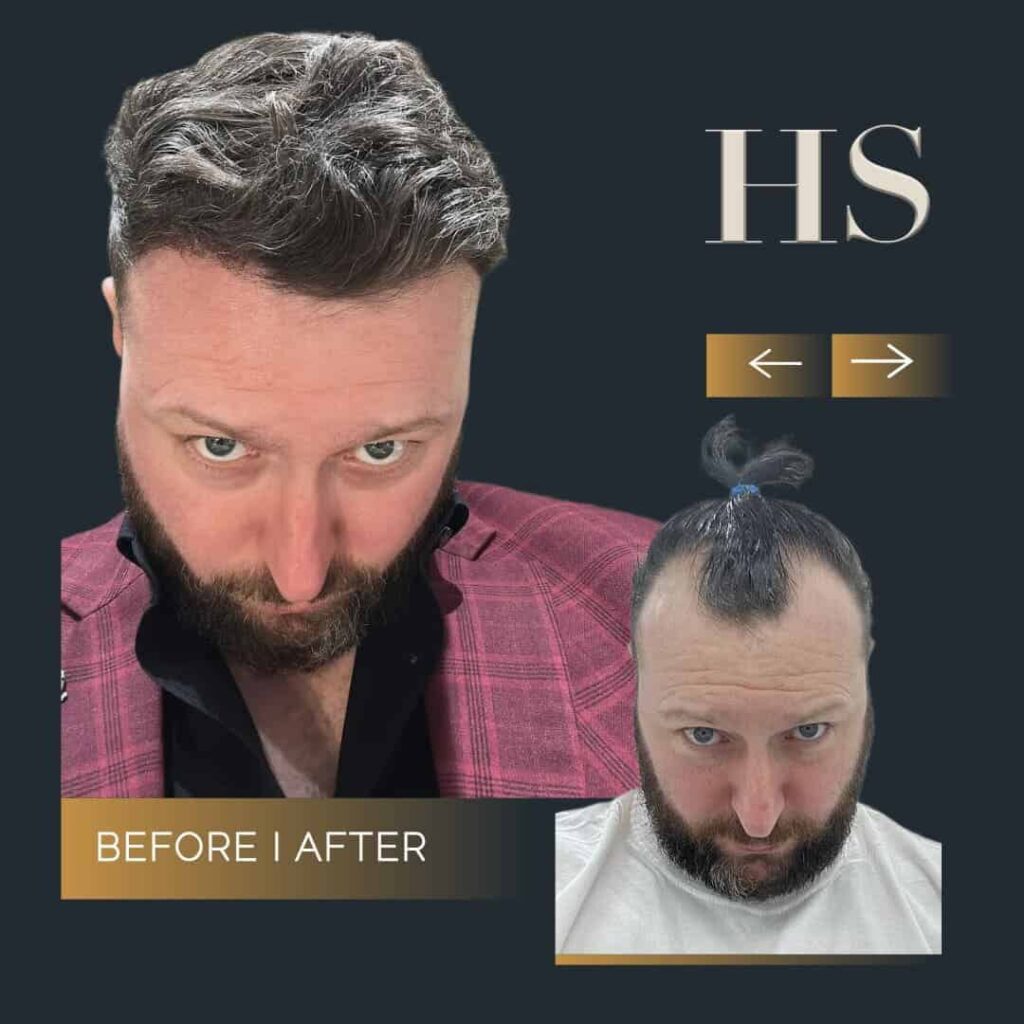
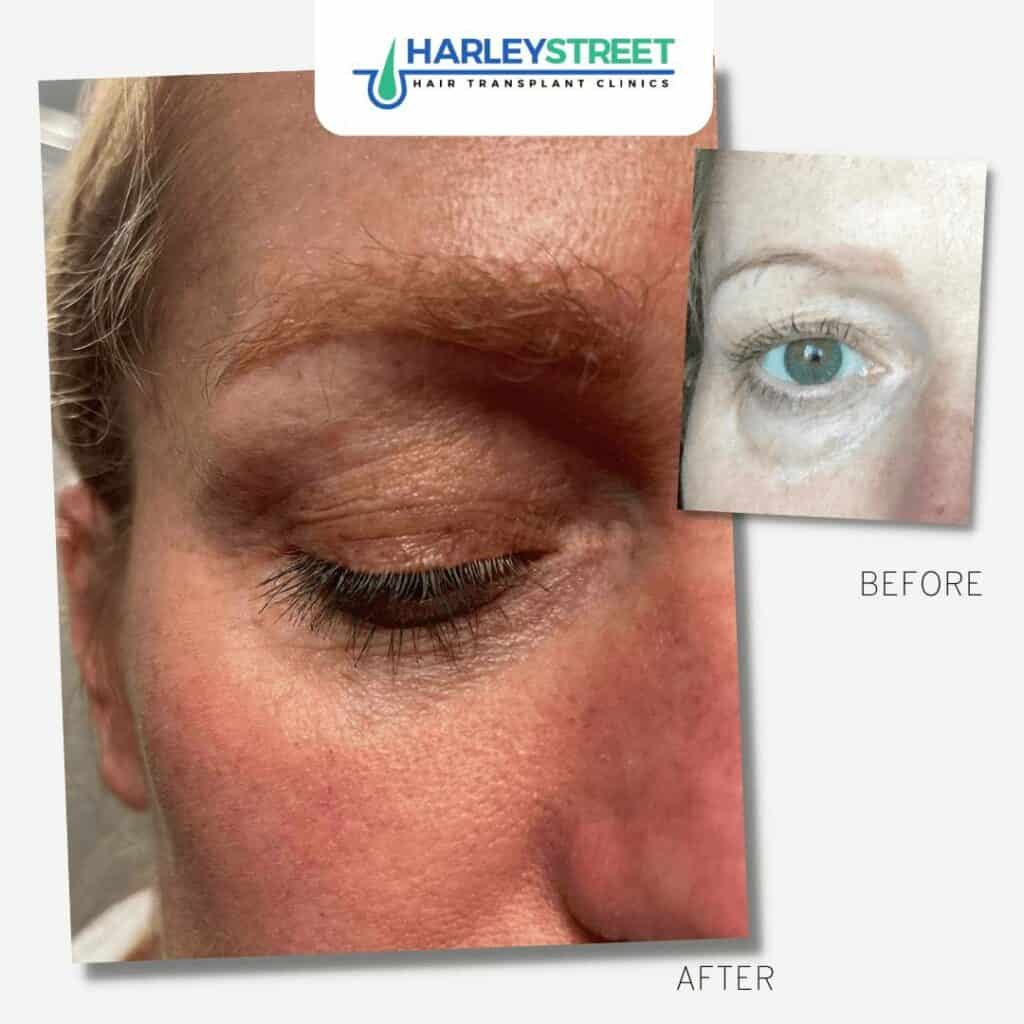
A selection of results from patients treated at our Liverpool clinic. All procedures were performed by our GMC-registered surgeons.
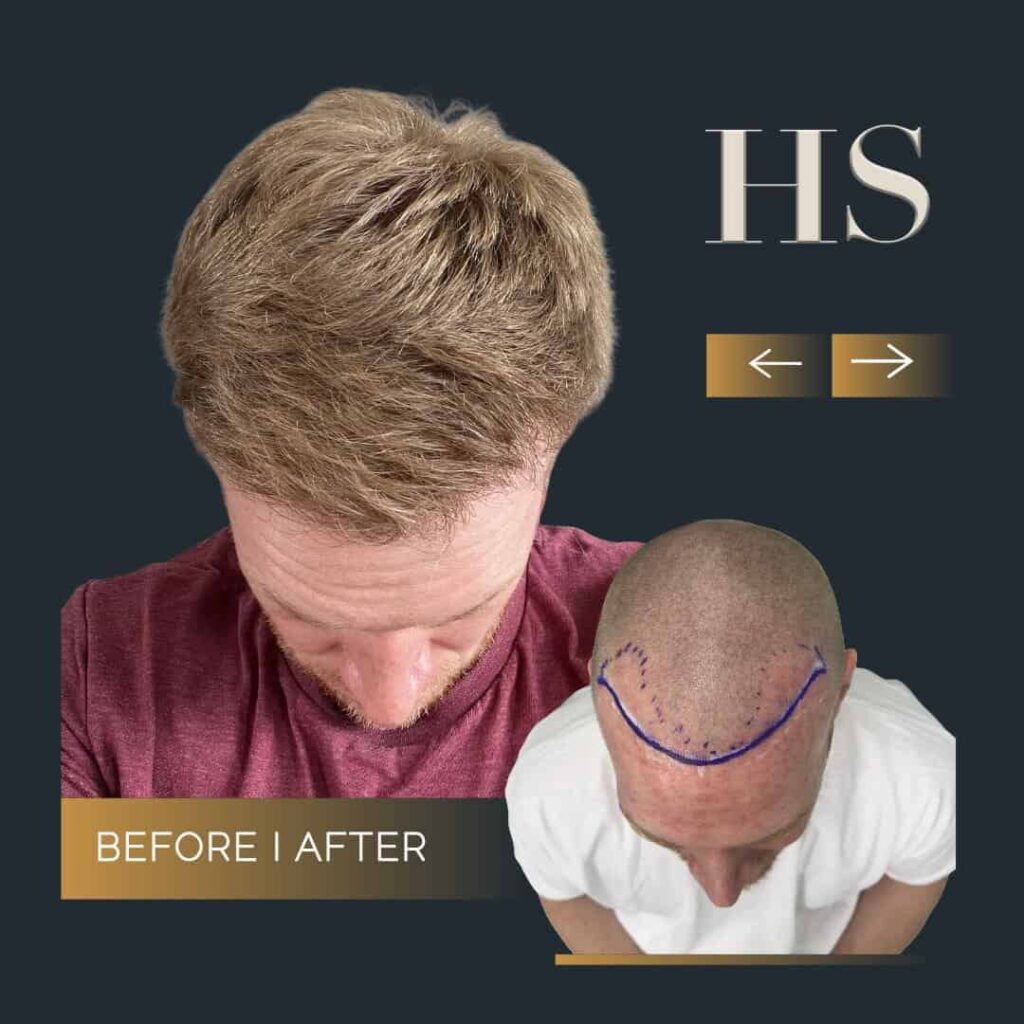
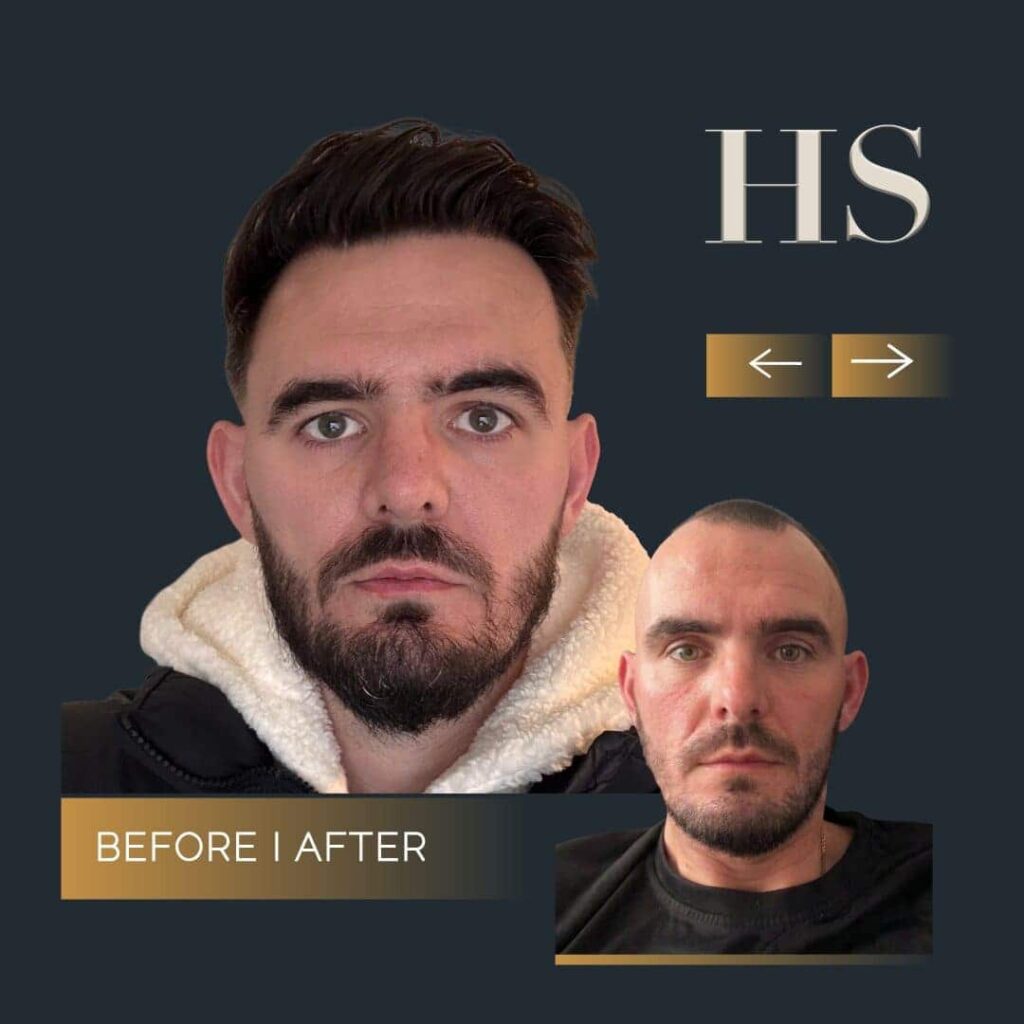
Patient results from eyebrow restoration procedures at our Liverpool clinic.
Eyebrow hairs do not all grow in the same direction. At the medial head of the brow they angle upward. Across the body of the brow they trend outward and slightly downward. At the lateral tail they angle more steeply downward. Replicating this means the surgeon adjusts angle and direction continuously across a strip of skin less than two centimetres wide. A single incorrectly angled graft in the middle of the brow will grow visibly against its neighbours.
Graft selection adds another layer. Fine single-hair follicles are chosen for brow work wherever possible, because coarse multi-hair grafts produce too much density and can appear pluggy in the thin skin of the brow area. The surgeon selects grafts under magnification before placement and pairs them to the zone being treated.
This is why eyebrow transplants take four to six hours despite the low graft count. The procedure is not quick by volume standards. It is precise by design.
The most common causes seen at our Liverpool clinic are over-plucking that has permanently damaged follicles, alopecia areata affecting the brows, thyroid-related diffuse brow thinning (particularly the outer third), and scarring from injury or past surgery. Some patients have simply never had full brow hair due to genetics.
Patients with active alopecia areata should wait until the condition has been stable for at least twelve months before considering a transplant. Active autoimmune activity can attack transplanted grafts as it does native hair. Patients with thyroid conditions should have those investigated and under management before surgery. These are not permanent exclusions, they are timing considerations. The surgeon will advise clearly on readiness at consultation.
Avoid cosmetic products over the brow area for ten days post-procedure. Transplanted hair sheds between weeks two and four. New growth begins at month three and builds through months four to six. The full brow result is typically visible at nine to twelve months.
One practical note: transplanted brow hair grows at the rate of scalp hair, which is faster than natural brow hair. Most patients find they need to trim the transplanted hair every three to four weeks once it has matured. This is a minor and expected part of the long-term result.
Eyebrow transplant is the most technically precise procedure we perform. The brow has a specific directional pattern that changes across three distinct zones. Single-hair placement at exact angles is not an optional refinement — it is the baseline requirement for a result that looks like a real eyebrow.
The medial third, body and tail of the brow each have a different hair direction and angle of exit. Some areas run almost parallel to the skin. Your surgeon maps the directional plan across the entire brow before the first incision. This is the step that separates a natural-looking result from one that reads as transplanted.
Eyebrow grafts require single-hair follicular units. Multi-hair grafts are not used because they create unnatural clustering. Selecting, isolating and placing individual follicles takes longer but is the only technique that allows the fine, graduated tail of the brow to be recreated convincingly.
Unlike microblading, a transplanted eyebrow is a living result. The hair grows, responds to styling, and adapts over time. If you shave or tint your natural brows, the transplanted hair will respond in the same way. The shape agreed at design is the permanent baseline, with room to refine with simple grooming.
Eyebrow loss from alopecia areata, over-plucking, trauma or cosmetic tattoo removal can all be addressed with transplantation. The consultation determines candidacy, particularly for patients with active alopecia, where timing relative to disease activity is a key factor.
What to expect after your procedure, week by week and month by month.
The brow area will appear red with small scabs at each graft site. Do not touch or scratch the area. Keeping the face dry for the first five days is important — take care when washing your hair to avoid water running down the forehead. Avoid make-up in the brow area entirely during the first week. Mild swelling around the eyes is normal and typically resolves by day four.
Most transplanted brow hairs will shed during this period. This is expected and the follicle remains in place. The brow will appear sparse during this phase. You can carefully apply light make-up around — not over — the transplanted zone from week three if required. Avoid any threading, waxing or plucking of the transplanted area.
Regrowth begins at three to four months. Eyebrow hair initially grows continuously and will need trimming — it behaves like scalp hair in the first growth cycle before slowing to a more normal brow rate. Most patients see close to full density by nine months. The hair may need light styling or trimming monthly during the first year.
Eyebrow transplants involve smaller graft counts than scalp procedures and are priced accordingly. A full bilateral eyebrow transplant typically starts from around £3,000 to £3,500. The surgeon confirms the exact figure at consultation after assessing the degree of brow loss and the target shape. Consultations are free.
Make the best investment in yourself and find out more about how we can help eliminate hair loss for good!
Our Liverpool clinic is at Exchange Flags in the city centre, a short walk from Liverpool Lime Street and Liverpool Central stations.
Hair Transplant Liverpool
Horton House, Exchange Flags,
Liverpool, L2 3PF
Queen Square Bus Station is also nearby. There is no on-site parking, but several multi-storey car parks are within a five-minute walk. Appointments are required.
Yes. Transplanted brow hair comes from DHT-resistant scalp follicles and will not fall out. It grows for life and can be trimmed and groomed like natural brow hair.
It grows at scalp speed, which is faster than natural brow hair. Most patients trim every three to four weeks. Otherwise it behaves identically. It can be shaped, tinted and styled.
In most cases yes. Existing microblading does not prevent a transplant, though repeated sessions may leave some scar tissue in the dermis. The surgeon assesses this at consultation and adjusts the placement approach if needed.
Four to six hours. Eyebrow work is slower per graft than scalp work because of the precision angle adjustments required across a small area.
Avoid all products directly over the brow area for ten days. After that, cosmetics can be applied carefully around the treated zone. The surgeon will give specific instructions at discharge.
Yes, though scar tissue has reduced blood supply compared to normal skin, which can affect graft survival in that specific area. The surgeon will examine the scar at consultation and give an honest assessment of what is achievable.
Aside from achieving fantastic results, we believe that keeping in touch with our patients before, during and after their hair transplantation procedure is paramount – it helps to keep our patients feeling calm and in control. We’re always on hand to provide guidance, support and aftercare advice. Time and again, our patients tell us that this is what sets us apart from other clinics.
You can read our great reviews of FUE hair transplants over on Google and Trustpilot