




Every procedure at Hair Transplant Liverpool is carried out by a doctor on the GMC register
Our clinic is centrally located and accessible from across Merseyside, Cheshire, and beyond
A candid assessment of your donor area and realistic expectations, no targets, no sales pitch
From the first follicle extracted to the final graft placed, your surgeon is present throughout
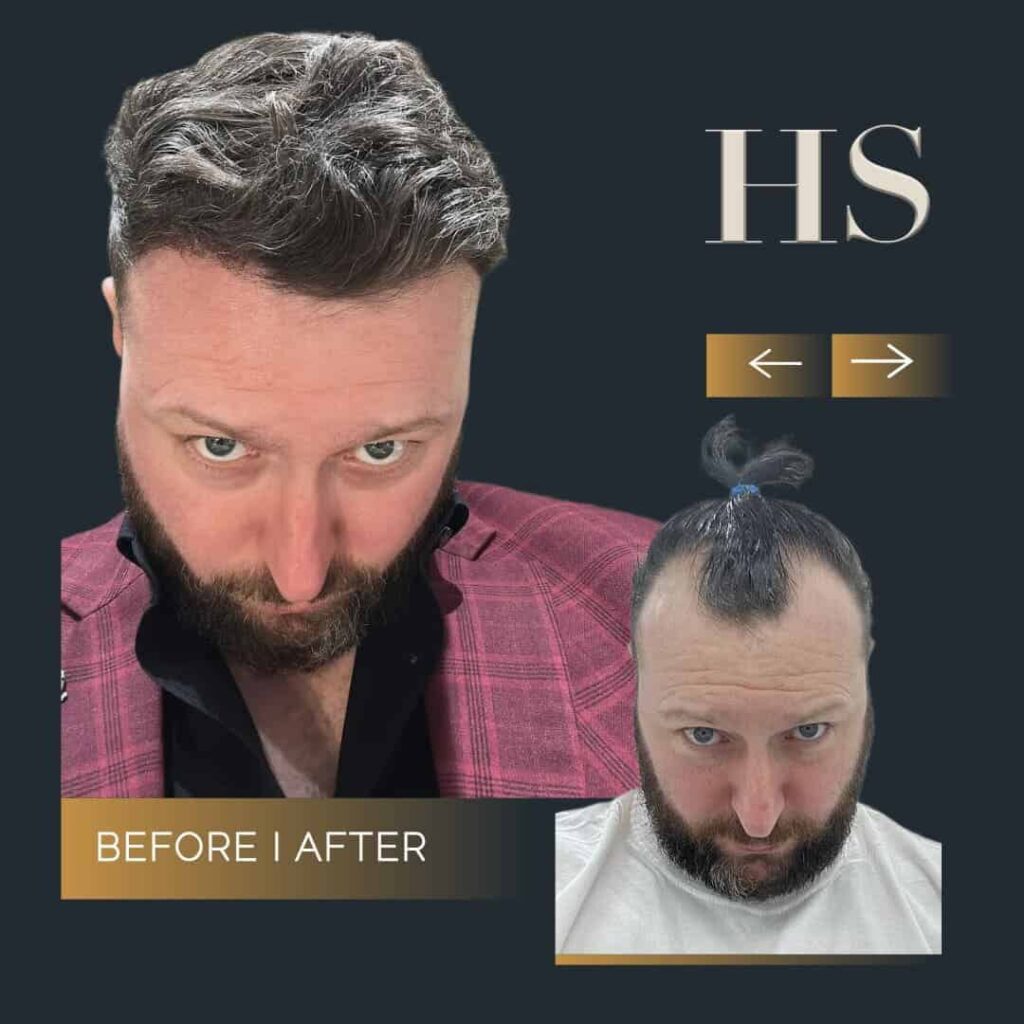
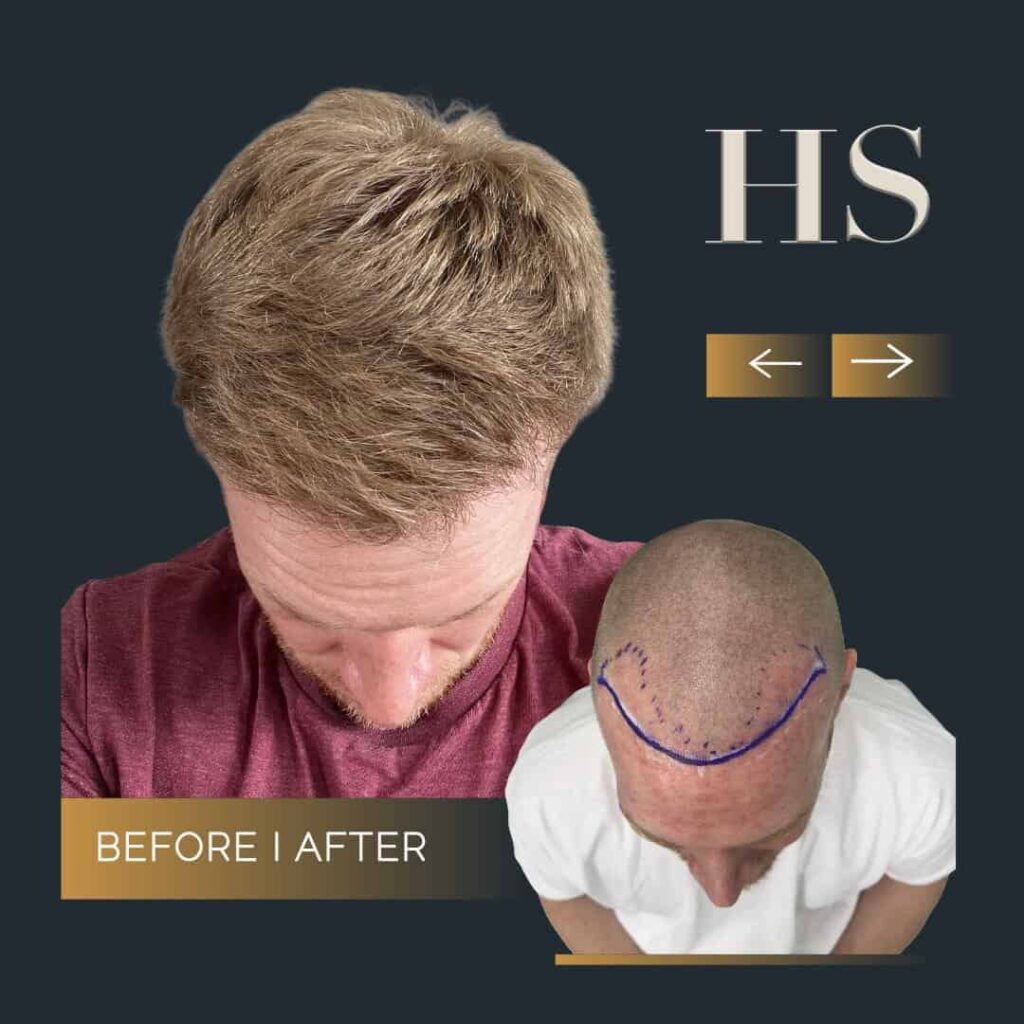
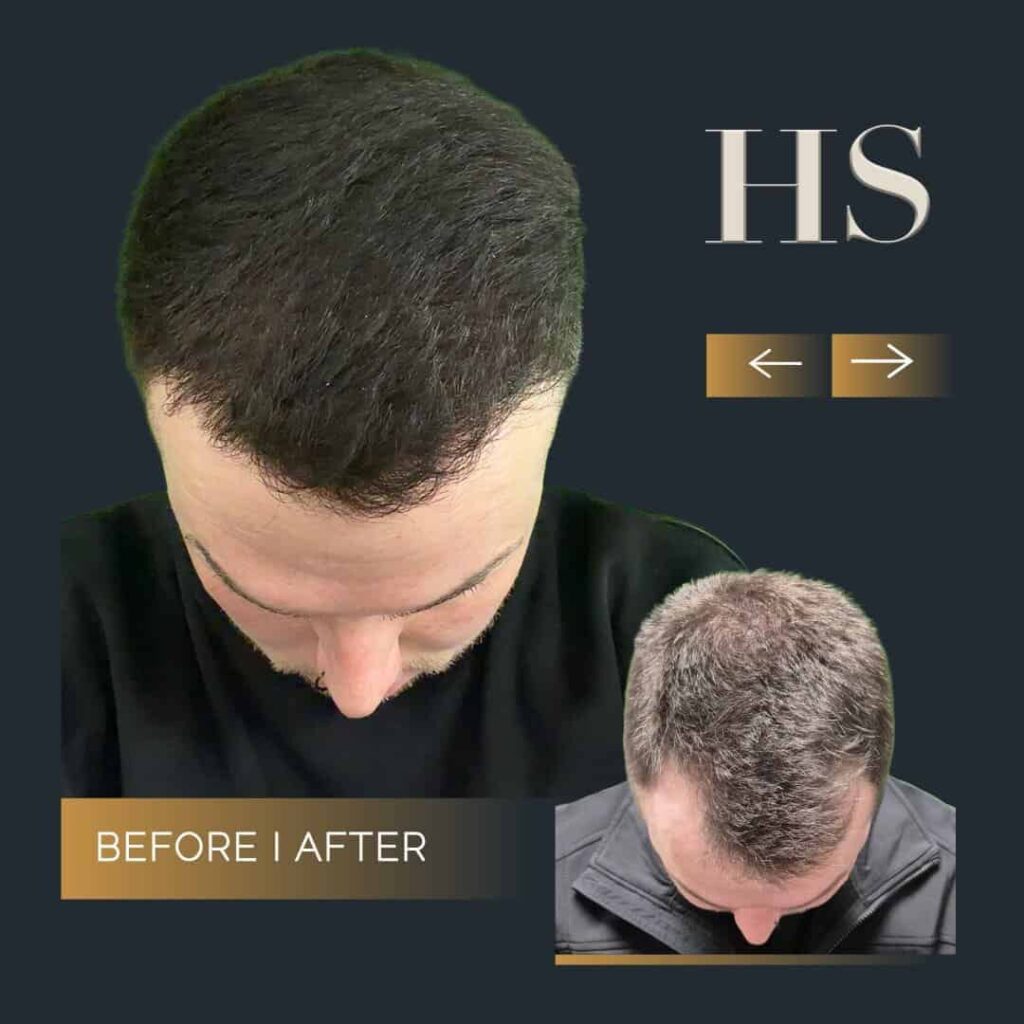
Before and After Hairline Hair Transplant Results in Liverpool
A selection of results from patients treated at our Liverpool clinic. All procedures were performed by our GMC-registered surgeons.
Make the best investment in yourself and find out more about how we can help eliminate hair loss for good!
Hairline Hair Transplant in Liverpool
Around two thirds of men will experience some degree of male pattern hair loss by the age of thirty-five. The hairline is where that loss almost always begins, and for most men it is where the psychological impact starts too. The face changes in the mirror. Photographs that used to look normal now show a receding edge. Hairstyles that worked for years stop working. A hairline transplant addresses this specific zone and, when planned and executed correctly, produces a result that is permanent and undetectable.
At our Exchange Flags clinic in Liverpool, hairline restoration is among the most frequently performed procedures. The technical demands are significant: every graft at the front edge must be placed at an angle that produces a flat, natural growth pattern, and the design itself must be right before a single incision is made. Redoing a hairline that has healed in the wrong position or at the wrong angle is far harder than getting it right the first time.
Before and After Hairline Transplant Results
A selection of hairline restoration results from our Liverpool patients.
How Hairlines Recede: The Norwood Pattern
Male hairline recession follows a broadly predictable path described by the Norwood scale. At Norwood I the hairline is intact. At Norwood II a slight recession at the temples begins. Norwood III is where the temporal recession becomes clinically significant and the hairline takes on an M-shape, with the central forelock remaining but the corners pulling back. Norwood IV brings recession across the frontal zone and early thinning of the crown. Most patients first seek hairline restoration at Norwood III or early IV, when the change has become visible in everyday life and difficult to conceal.
The rate of progression matters as much as the current Norwood stage. A twenty-eight-year-old at Norwood III who has been at that stage for four years, is using finasteride and has a strong family history of early stabilisation presents a very different risk profile from a twenty-eight-year-old at Norwood III who has moved from Norwood II in the past twelve months with no medical management. The surgeon considers both current presentation and likely future progression when recommending the appropriate hairline position and graft count.
Temple Points: The Detail That Makes the Difference
The temple points are the downward projections of the hairline at either side of the forehead, the narrow extensions that frame the face laterally. They are typically the first part of the hairline to recede, and their restoration often has more visual impact than restoring the front central hairline.
Temple point restoration requires fine single-hair grafts placed at angles as shallow as five to ten degrees to the scalp surface, because the hairs at the natural temple points lie almost flat against the skin and must do so in the transplant result to look authentic. A temple point with grafts standing upright looks obviously surgical. One with grafts lying correctly flat against the skin, following the natural direction of the existing hair above and behind it, is indistinguishable from the original.
When planning a hairline restoration that includes the temples, the surgeon maps both the central hairline and the temple point outline separately, checking that both relate correctly to the patient’s face shape and that the transition between the two is smooth. A hairline with a well-restored centre and poorly designed temples looks incomplete. Both must be planned together.
What Makes a Hairline Look Natural
Natural hairlines have three characteristics that surgical hairlines frequently fail to replicate. The first is micro-irregularity: no natural hairline runs in a perfectly smooth arc. Individual hairs are set at slightly varying positions along the leading edge, creating a slight randomness that reads as organic. A geometrically smooth hairline reads as constructed.
The second is the transition zone. Between the very front edge of the hairline and the zone of full density behind it, there is a gradient of progressively denser hair. At the very front, single fine hairs. Behind them, slightly thicker single hairs. Behind those, the first doubles and triples. This gradient is reproduced by careful graft selection and zone-by-zone placement rather than placing any graft anywhere in the recipient area.
The third is angle. Hairs at the hairline grow forward and downward, lying against the forehead at angles of ten to twenty degrees to the scalp. Hairs placed at steeper angles stand forward rather than lying down, creating a shadow-casting brow effect that reads as transplanted even from a distance. Every incision angle is set by the surgeon based on the growth pattern of your existing hair.
The Procedure at Our Liverpool Clinic
The morning begins with the design session. The surgeon draws the proposed hairline with a surgical marker, discusses position, temple extension and density gradient, and makes adjustments until both of you are satisfied. Consent is signed after the design is agreed, not before. Extraction from the donor zone follows, then recipient incisions along the hairline, then graft placement. A standard hairline procedure involving 1,000 to 2,000 grafts runs six to eight hours. Aftercare follows the standard FUE protocol.
Why Hair Transplant Liverpool for Your Hairline?
A hairline transplant is the most visible result in hair restoration. The margin between a natural and an obviously transplanted result is measured in millimetres. The difference comes down to irregular design, correct angle and precise single-hair placement at the leading edge.
Irregular, natural hairline design
A straight hairline looks transplanted. A natural hairline has micro-irregularities: slight variation in the leading edge, temple point recession appropriate to age, and a gradual transition from single hairs to multi-hair follicular units as you move backwards into the scalp. Your surgeon designs this specifically for your face, not from a template.
Temple point reconstruction where appropriate
Temple points are the part of the hairline that frames the face laterally. Recession here is often undertreated. When donor supply allows, restoring the temple points as part of the hairline procedure produces a significantly more complete and youthful result than addressing the frontal hairline in isolation.
Age-appropriate placement
A hairline designed for a 32-year-old should not sit at the position typical of an 18-year-old. Your surgeon considers your age, the likely future progression of your hair loss, and your donor supply when determining how far forward the hairline can realistically be placed. An over-restored hairline that cannot be supported by future donor availability is a long-term problem.
Leading edge placed with single-hair follicles only
The front row of any natural hairline consists entirely of single-hair follicular units. Using multi-hair grafts at the leading edge, even if they are denser, produces a plugged appearance. Your surgeon selects and places individual follicular units specifically at the leading edge, transitioning to doubles and triples behind.
Hairline Transplant Recovery Timeline
What to expect after your procedure, week by week and month by month.
The transplanted hairline will be visible with small graft crusts along the new leading edge. Keep the area dry, sleep with your head elevated, and avoid any forward bending or activity that increases frontal pressure. Day five washing clears most of the initial crusting. Mild swelling in the forehead is expected and typically resolves between days three and five.
Hairline grafts shed during this period, which temporarily reverses the visual improvement. The follicles are securely implanted and the shedding is a normal part of the growth cycle. Avoid direct sun exposure on the hairline area and continue avoiding heavy physical activity until week three.
The new hairline becomes visible from around months three to four. The leading edge, which uses fine single-hair follicles, fills in progressively over months five to nine. Full density at the hairline is typically reached by ten to twelve months. The result at twelve months is effectively permanent assuming no further native hair loss occurs behind the transplanted area.
Cost of Hairline Transplant in Liverpool
A temple-only restoration addressing both temple points typically starts from £3,000 to £3,500. A full frontal hairline restoration covering the entire frontal zone and temporal recession runs from £4,000 to £4,500. More advanced cases covering the hairline and extending into the mid-scalp are assessed individually at consultation. Finance is available. Your free consultation includes a drawn hairline design so you can visualise the proposed result before making any commitment.
Make the best investment in yourself and find out more about how we can help eliminate hair loss for good!
Where to Find Us
Our Liverpool clinic is at Exchange Flags in the city centre, a short walk from Liverpool Lime Street and Liverpool Central stations.
Hair Transplant Liverpool
Horton House, Exchange Flags,
Liverpool, L2 3PF
Queen Square Bus Station is also nearby. There is no on-site parking, but several multi-storey car parks are within a five-minute walk. Appointments are required.
Frequently Asked Questions
Hairline position is planned relative to your forehead proportions, facial structure, age and long-term hair loss trajectory. Placing a hairline too low for a young patient risks it looking incongruous if hair loss behind it continues. The surgeon recommends a position that will look appropriate at every stage of life, not just immediately post-procedure.
A maturing hairline moves slightly above the juvenile hairline position and stabilises. A receding hairline continues to move back over time, typically starting at the temples. If you are unsure which you have, a clinical assessment is the most reliable way to determine the pattern and rate of change.
A temple restoration typically needs 800 to 1,400 grafts across both sides. A full frontal hairline including the temples requires 1,500 to 2,500 grafts. The surgeon confirms the count at consultation after assessing the surface area and density target.
The design is the template. Hair texture, growth angle and density at maturity produce a natural variation from the exact drawn line, which is what creates a result that looks genuinely grown rather than placed.
Yes. Traction alopecia at the temples, frontal fibrosing alopecia affecting the hairline and general female hairline recession are all treated at our Liverpool clinic. Female cases involve specific assessment considerations around donor stability and underlying cause.
Not necessarily, though it is often recommended for patients under forty with active or progressive hair loss. Finasteride helps protect the native hair around and behind the transplanted zone from continuing to thin after surgery. The surgeon will discuss medical management at consultation.
Patient Testimonials
Aside from achieving fantastic results, we believe that keeping in touch with our patients before, during and after their hair transplantation procedure is paramount – it helps to keep our patients feeling calm and in control. We’re always on hand to provide guidance, support and aftercare advice. Time and again, our patients tell us that this is what sets us apart from other clinics.
You can read our great reviews of FUE hair transplants over on Google and Trustpilot