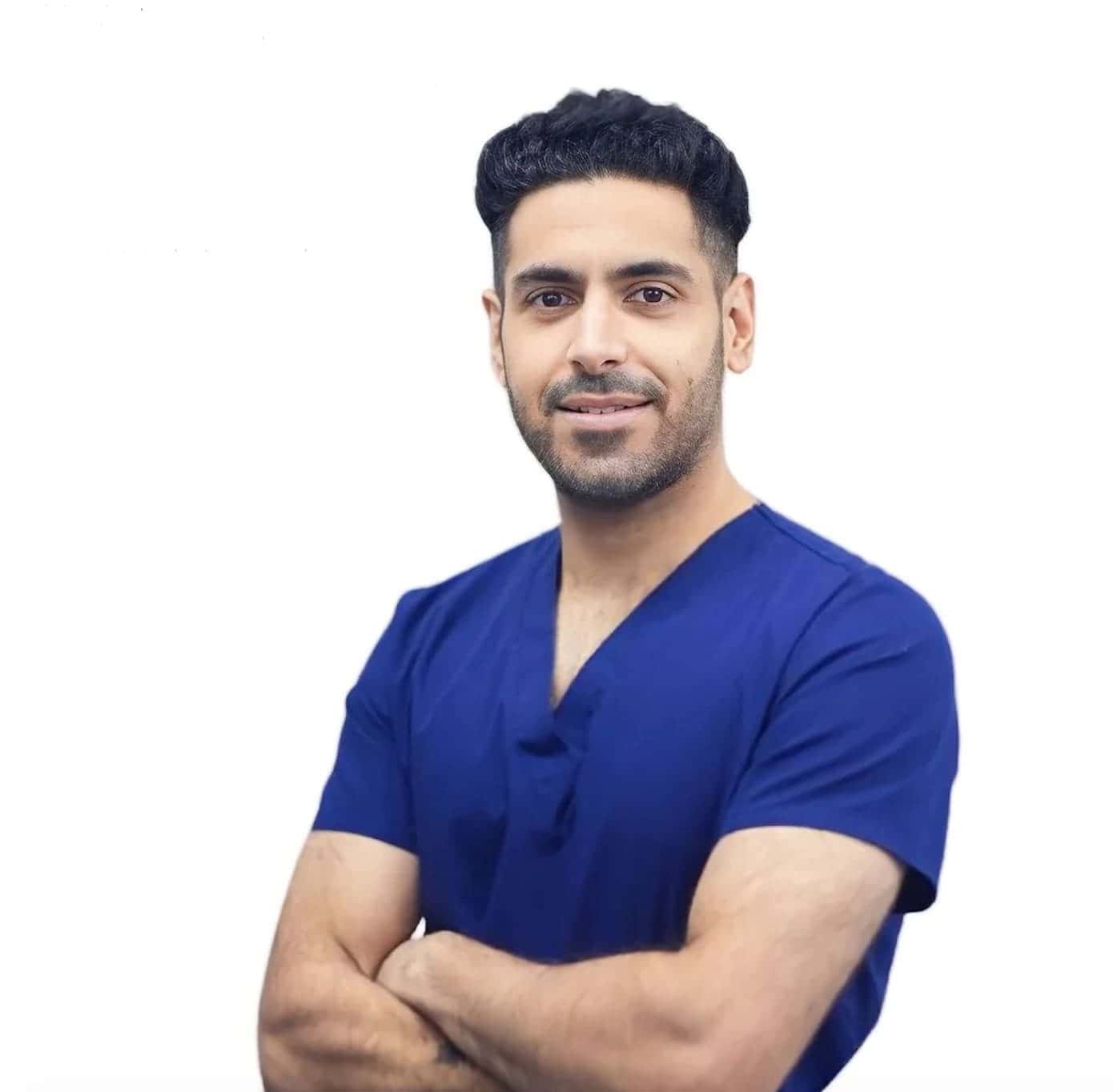





Every procedure at Hair Transplant Liverpool is carried out by a doctor on the GMC register
Our clinic is centrally located and accessible from across Merseyside, Cheshire, and beyond
A candid assessment of your donor area and realistic expectations, no targets, no sales pitch
From the first follicle extracted to the final graft placed, your surgeon is present throughout
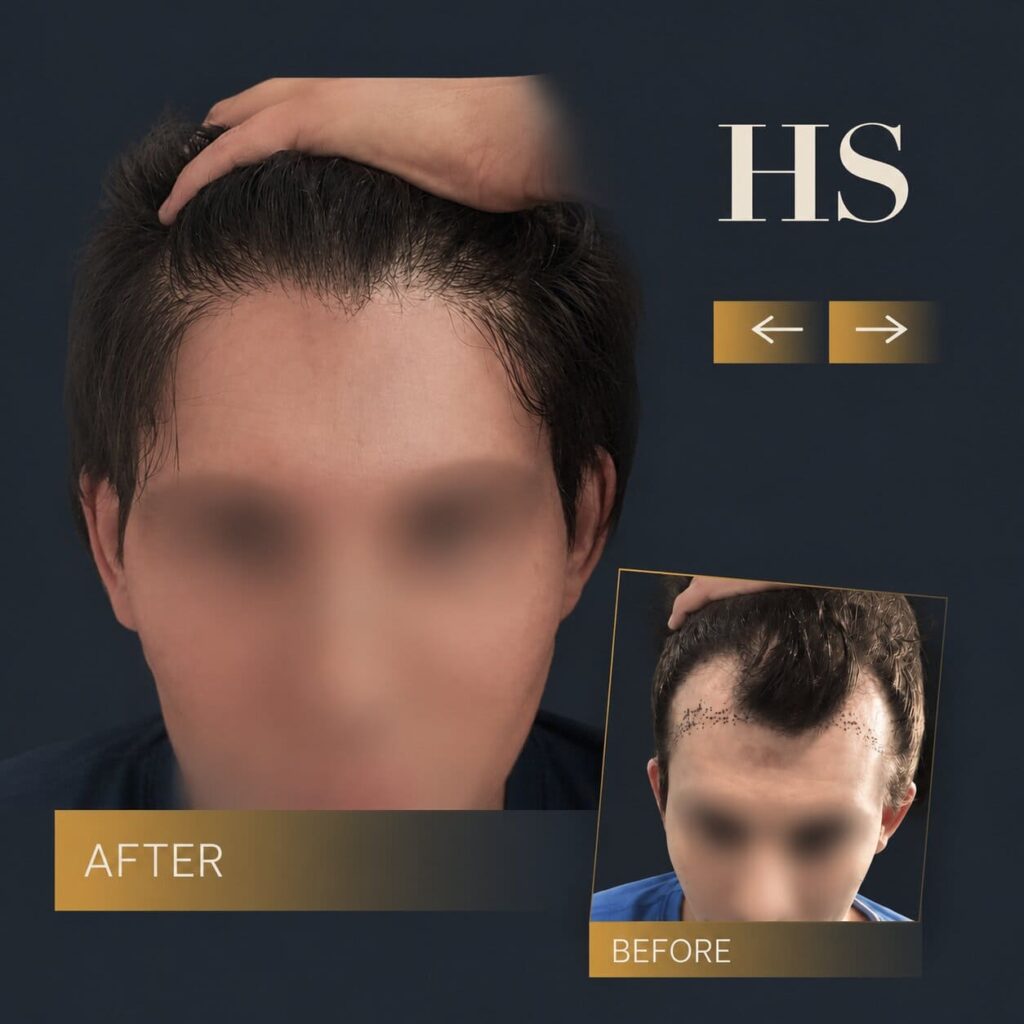
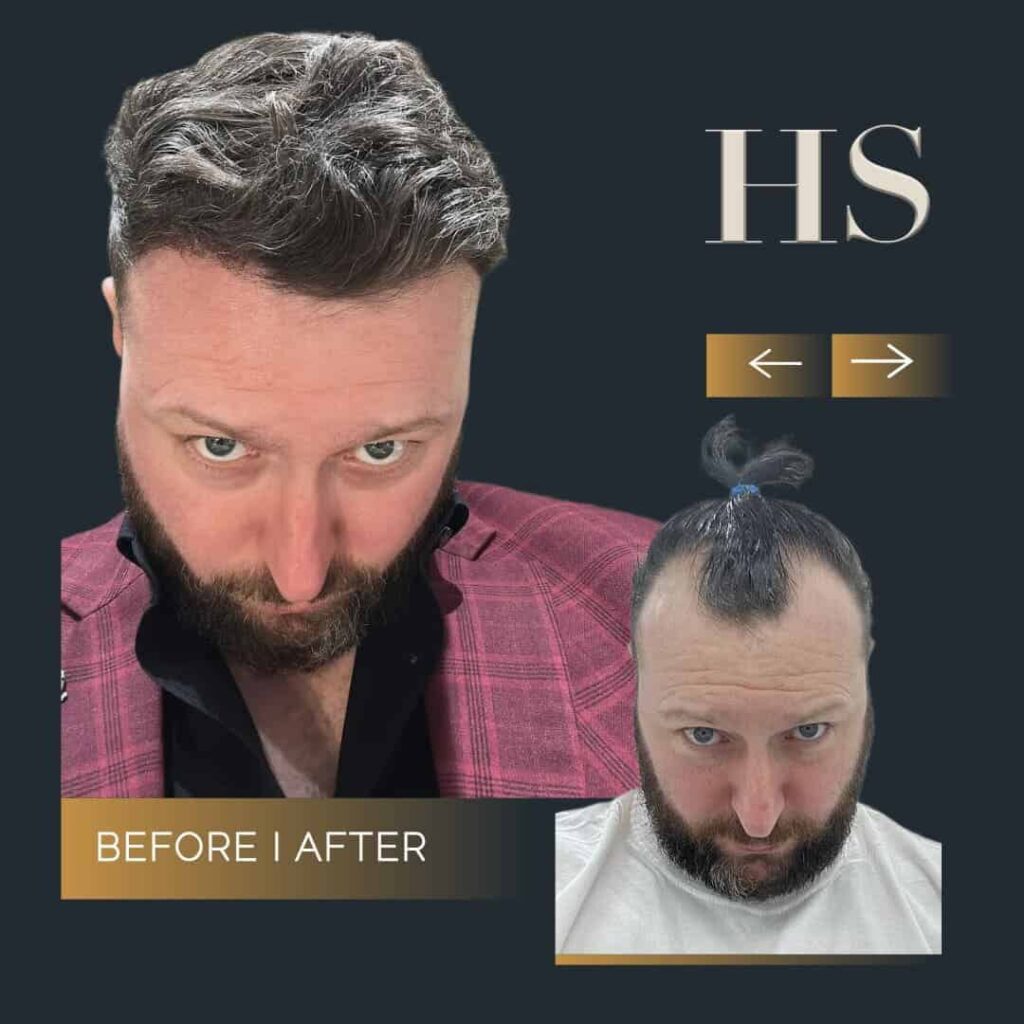
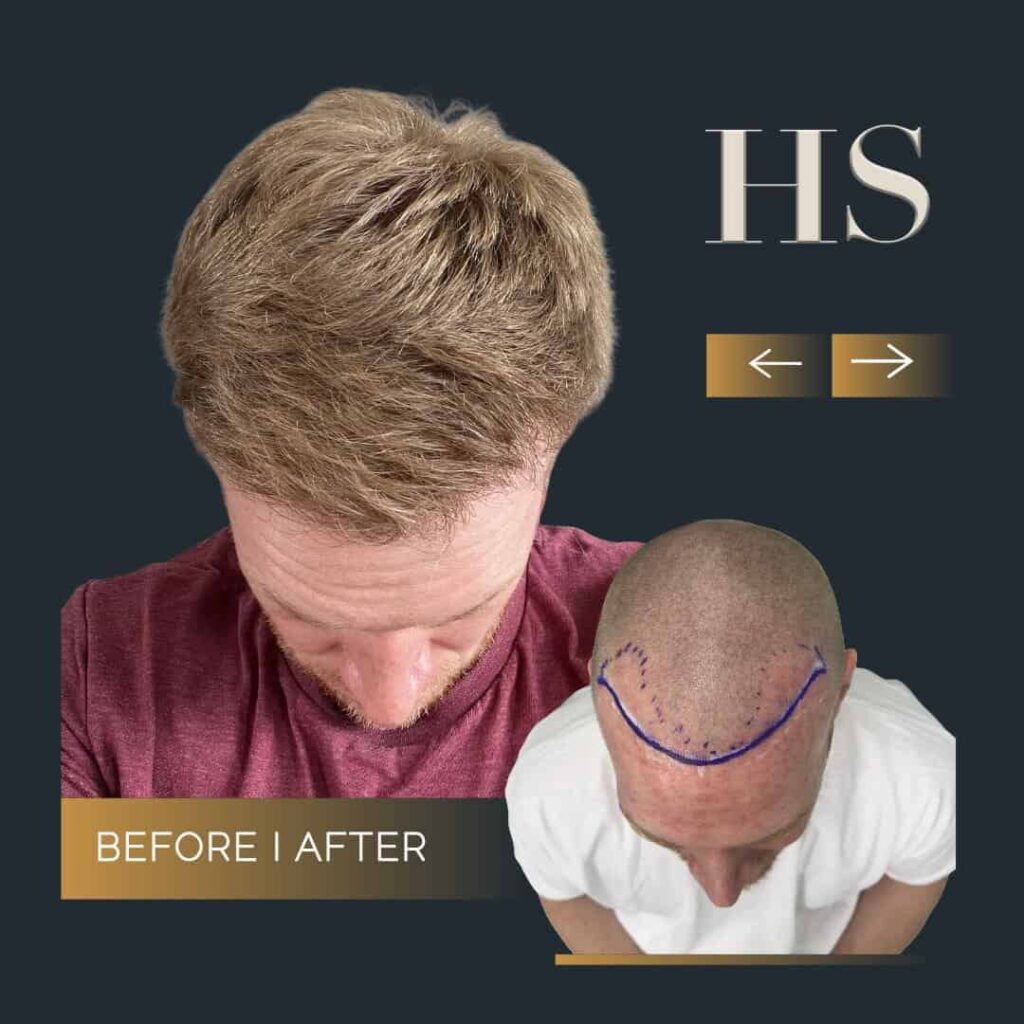
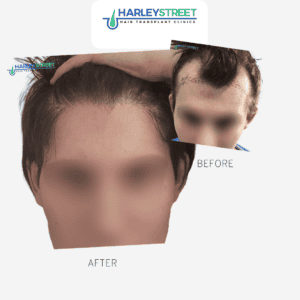
Before and After Transgender Hair Transplant Results in Liverpool
A selection of results from patients treated at our Liverpool clinic. All procedures were performed by our GMC-registered surgeons.
Make the best investment in yourself and find out more about how we can help eliminate hair loss for good!
Transgender Hair Transplant in Liverpool
Hairline surgery for transgender patients is not a variation of standard hair transplant surgery. It is a different clinical conversation with different aesthetic goals, different hormonal considerations and, for many patients, a different relationship to the result. At our Liverpool clinic we approach transgender hair restoration without assumptions about what a patient wants or where they are in their transition. The goals you bring to the consultation are the goals the surgeon plans around.
The most common presentation at our Exchange Flags clinic is MTF patients seeking a feminised hairline. A masculine hairline that has receded into an M-shape carries a strong gendered reading, and restoring it to a rounded, lower profile with full temple coverage is often described by patients as one of the most impactful single interventions in their transition. We also see FTM patients and non-binary patients with a range of hairline goals, and treat each case on its own terms.
Before and After Transgender Hair Transplant Results
Hairline feminisation results from Hair Transplant Liverpool.
Feminising a Hairline: The Anatomy
A feminine hairline differs from a typical male hairline in three measurable ways. It sits lower on the forehead, roughly five to six centimetres from the brow versus the male average of six to eight centimetres. It has a rounded or oval shape rather than the angular M-profile of male pattern recession. And the temple regions are full, with hair extending downward toward the cheekbone on both sides, framing the lateral face.
Restoring all three of these characteristics requires different planning than a standard male hairline restoration. The lower position demands more grafts to cover the additional frontal surface area. The rounded shape requires precise temple design rather than simply filling in the two receded corners. And the lateral temple fullness, the part that most clearly reads as feminine from the side, requires fine single-hair grafts placed at very shallow angles to lie flat and create a natural feathered edge rather than a blunt hairline wall.
The hairline design process at consultation is an extended conversation. The surgeon will show you the proposed outline on your scalp with a marker and adjust it until the position, shape and temple extension all align with what you are looking for. The design is agreed before consent is signed.
Timing and Hormone Therapy
For MTF patients on oestrogen therapy, the general recommendation is to have been on a stable HRT regimen for at least twelve months before hairline surgery. This gives oestrogen and any anti-androgens time to slow or arrest remaining androgenic hair loss, providing the surgeon with a clearer picture of the stable hairline position. Operating before hormones have stabilised hair loss risks the native hair around the transplanted zone continuing to thin after surgery.
Anti-androgens including spironolactone and cyproterone acetate have their own effects on hair loss progression and these are factored into the consultation assessment. Some patients are already past the point where hormonal hair loss stabilisation is meaningful, in which case the timing consideration applies differently.
FTM patients on testosterone who experience androgenic hair loss that goes beyond what they want can also be assessed for surgical management. The consultation approach is the same: understand the goals, assess the stable pattern, plan conservatively.
Why Hair Transplant Liverpool for Transgender Hairline Surgery?
Hairline feminisation is a specialised area of hair transplant surgery with different aesthetic goals, different hormonal considerations, and a different patient journey. Both surgeons have experience working with transgender patients at the consultation stage and throughout.
Understanding of feminisation anatomy
A feminine hairline is lower, rounder and lacks the temporal recession associated with male pattern hair loss. Reconstructing it requires lowering the central hairline, rounding the corners, and restoring the temporal triangles. The design is governed by the golden ratio of the upper facial third, not a general hair transplant template.
Hormone therapy timing discussion
Oestrogen therapy often improves scalp hair density in transgender women over the first one to two years of treatment. Your surgeon will discuss the optimal timing for surgery relative to your hormonal treatment to ensure the hairline is designed against a stable baseline, not a transitional one. Operating too early can produce a result that requires revision as hormonal changes continue.
No need to shave in most FUT cases
Patients who are not yet open about their transition often prefer FUT for its lack of visible donor shave. The strip is taken from beneath the existing hair, leaving no visible evidence of surgery during recovery. This is a clinical and practical decision that your surgeon will discuss during consultation.
Confidential, non-judgmental consultation
Your consultation is medical and private. There is no required disclosure of your transition journey unless you choose to share it. The surgeon needs to know your hormonal status and any medications you are taking. Everything else is at your discretion.
Transgender Hair Transplant Recovery Timeline
What to expect after your procedure, week by week and month by month.
Recovery in the first five days follows standard hair transplant aftercare regardless of the technique used. Keep the recipient area dry, sleep elevated, and avoid touching or disturbing the grafts. If FUT was used, the donor area at the back of the scalp requires additional care: avoid any activity that strains the wound. Day five washing is performed as demonstrated at discharge. The new hairline will not be visible at this stage — graft crusts obscure the leading edge.
Transplanted hair sheds during this period. This phase can be emotionally difficult as the early result temporarily disappears. It is a normal and expected part of the process. The follicles remain in place. Returning to normal activity, including styling the surrounding hair, is typically possible from week three. Any prescribed hair loss medications should be continued throughout.
New growth becomes visible from months three to four and accelerates from month six. The hairline fills in progressively as individual follicles complete their first growth cycle. The final result is assessed at twelve months. For patients who required significant lowering or temporal reconstruction, the twelve-month result is typically stable and permanent assuming ongoing hormonal treatment remains consistent.
Cost of Transgender Hairline Restoration in Liverpool
MTF hairline restoration covering the frontal hairline and both temple regions typically requires 1,500 to 2,500 grafts and is priced from around £4,500 to £6,000 depending on the degree of recession and the size of the coverage area. FTM and non-binary cases vary depending on goals and are quoted individually at consultation. Finance is available. Your consultation is free, private and carries no obligation to proceed.
Make the best investment in yourself and find out more about how we can help eliminate hair loss for good!
Where to Find Us
Our Liverpool clinic is at Exchange Flags in the city centre, a short walk from Liverpool Lime Street and Liverpool Central stations.
Hair Transplant Liverpool
Horton House, Exchange Flags,
Liverpool, L2 3PF
Queen Square Bus Station is also nearby. There is no on-site parking, but several multi-storey car parks are within a five-minute walk. Appointments are required.
Frequently Asked Questions
No. A hair transplant is a standalone procedure and does not require GRS to have taken place. Candidacy is assessed on the basis of your hair loss pattern, donor supply, hormonal status and the goals you want to achieve.
The general recommendation for MTF patients is twelve months on a stable regimen. This allows oestrogen and anti-androgens time to slow androgenic hair loss and gives the surgeon a clearer view of the stable hairline position before planning the procedure.
Yes. All appointments at our Liverpool clinic are handled with full patient confidentiality. You will not encounter other patients during your visit. Personal information is managed in accordance with UK GDPR and our clinical duty of care.
Yes. Transplanted hair retains the characteristics of scalp donor hair and grows, responds to products and can be cut, coloured and styled in the same way as any other hair on your head. It is not distinguishable from natural hair once it has grown through.
The consultation will cover the implications of pre-hormone surgery honestly. For MTF patients pre-hormones, androgenic hair loss may still be active, which affects the risk of the surrounding native hair thinning after the procedure. Timing relative to your HRT plan is an important part of the discussion.
The two procedures are typically performed separately and by different surgical teams. Some patients sequence them, doing the hairline transplant first and FFS after, or vice versa. The surgeon will advise on optimal sequencing based on your overall plan.
Patient Testimonials
Aside from achieving fantastic results, we believe that keeping in touch with our patients before, during and after their hair transplantation procedure is paramount – it helps to keep our patients feeling calm and in control. We’re always on hand to provide guidance, support and aftercare advice. Time and again, our patients tell us that this is what sets us apart from other clinics.
You can read our great reviews of FUE hair transplants over on Google and Trustpilot